Showing posts with label Education. Show all posts

Monday, October 5, 2015

3 What We're Reading Today (10-5-15)

The Populist Prophet - The New Yorker
Margaret Talbot

Bernie Sanders, the Socialist Mayor  - The Atlantic
Russell Banks

The Breakdown of the Black Family  - The Atlantic
Kay Hymowitz

First, Let's Get Rid of All the Bosses  - The New Republic
Roger D. Hodge

Obama, Guns, and the Politics of Hopelessness - The New Yorker
John Cassidy

Many Former Foster Youths Don't Know They Have Health Care - NPR
Ray Glier

Our George Wallace - Slate
Jamelle Bouie

Jeb Bush, 'Free Stuff' and Black Folks - NY Times
Charles Blow

The Death of Evan Murray - Grantland
Charles Pierce

The Slave-State Origins of Modern Gun Rights - The Atlantic
Saul Cornell and Eric M. Ruben

The Data Are Damning: How Race Influences School Funding - The Atlantic
Gillian B. White

New York Police Will Document Virtually All Instances of Force - NY Times
Al Baker and J. David Goodman

Black patients fare better than whites when both get same healthcare, study finds - Los Angeles Times
Alan Zarembo

Arne Duncan's Wars - Politico
Michael Grunwald

Jorge Ramos' Long Game - NY Times
Marcela Valdes

The American Dream Shatters in Prince George's County - Washington Post
Michael Fletcher

Senate Strikes Compromise on Criminal Justice Reform - Politico
Rachael Bade, Daniel Lippman, and Sarah Wheaton

Henry Dumas Wrote About Black People Killed By Cops. Then He Was Killed By A Cop. - NPR
Beenish Ahmed

Inside the ISIS Blueprint for Winning - The Daily Beast
William McCants

Saturday, December 6, 2014

0 What We've Been Reading Recently - Mike Brown, Eric Garner, #BlackLivesMatter, and more (UPDATE: 12/16/14)

A compilation of what I've been scouring on the InterWeb. It's by no means comprehensive or the most wonderful collection of links, posts, etc., but it's something to reference that shouldn't drive up your data charges like fracking through someone's Facebook Timeline.

UPDATED: 12-16-14 (11:05 PM Central)

Off Target on Toy-Gun Regulation - New York Times
Jay Caspian Kang

Cleveland police shot and killed 12 year-old Tamir Rice as he carried toy gun - Vox
German Lopez

How to Uphold White Supremacy by Focusing on Diversity and Inclusion - Model View Culture
Kyra

Another March on Washington? After Ferguson, 'That's not change. That's just church.' - The Guardian
Steven W. Thrasher

From Ferguson and New York, the Most Impactful Protest Art in America - Voice Project

The Hidden Trauma Plaguing American Kids - Think Progress
Sam P.K. Collins

Schools' Discipline for Girls Differs by Race and Hue - New York Times
Tanzina Vega

Latina reproductive justice advocates condemn police violence against Black communities, endorse national march - Latina Institute
Loretta Kane

Unequal Treatment of 2 Protesters in Eric Garner Case, One White and One Black - New York Times
Jim Dwyer

The Fierce Urgency of Now: Why Young Protesters Bum-Rushed the Mic - The Root
Kirsten West Savali

Video shows John Crawford's girlfriend aggressively questioned after Ohio police shot him dead in Walmart - The Guardian
Jon Swaine

Chicago gave hundreds of high-risk kids a summer job. Violent crime arrests plummeted. - The Washington Post
Emily Badger

Why I chose not to march in DC - The Grio
Jessica Pierce

At Nets' Game, a Plan for a Simple Statement Is Carried Out t a T - New York Times
Scott Cacciola

In N.C., death of black teen raises question: Was it suicide or a lynching? - Washington Post
Todd C. Frankel

The Wealth Gap Between Whites and Minorities Is Growing - Five Thirty Eight
Ben Casselman

Data Shows Racial Profiling Increasing In Searches During Motor Vehicle Stops - Rhode Island ACLU

Rumain Brisbon Is Just the Latest to Be Shot Dead by a Cop Over a Phantom Gun - Mother Jones
Jaeah Lee

When Police 'Reforms' Only Legitimize Police Abuses - In These Times
Michael Collins

Sharpton Responds to Criticism That His Movement Excludes Younger Activists - The Root
Jamal Watson

UPDATED: 12-10-14 (1:59 AM Central)

Lessons from Camden - The Economist

Black Life is More - Tufts Observer
Kris Manjapra

St. Louis Police Pursue Assault Charge Against Youngest Member of Ferguson Commission - Huffington Post
Ryan J. Reilly

Feature: 'To My Unborn Son' - Afropunk

Viewpoint: Why Eric Garner was Blamed for Dying - BBC
Stacey Patton

Illinois General Assembly Revives Recording Ban - Illinois Policy
Jacob Huebert

Police Kill Black Women All the Time, Too -- We Just Don't Hear About It - Bustle
Evette Dionne

Eric Garner's widow Esaw on protesters: 'Keep fighting for what's right, to get justice.' - NY Daily News
Erik Badia, Richard Shapiro

Tips for Being an Unarmed Black Teen - The Onion

25 Activities Black People Should Avoid Around Cops - New York Magazine
Katie Zavadski

On the Cheapness of Life - The Atlantic
Ta-Nehisi Coates

An Open Letter of Love to Black Students: #BlackLivesMatter - Black Space Blog
Editorial

Turning rage to action: Indict Tufts seeks to shatter silence, fight anti-blackness - Tufts Daily
Lily Sieradzki

Ripping Apart the Chicago Gun Violence Myths, Part 1: Racism - Forward Progressives
Jasdye

Prosecutors and police: The inherent conflict in our courts - MSNBC
Letitia James

#CrimingWhileWhite, #AliveWhileBlack ignite conversation about white privilege - CBC
Anna Maria Tremonti

Ghostface Killah is Sick and Tired of Police Brutality in America - Vice
Zach Schwartz

At Eric Garner Protests, Some White Activists Are Being Called Out for Their Behavior - Village Voice
Katie Toth

A police officer's open letter to black protesters - The Grio
Officer Sanders

Applying 'Broken Windows' to the Police - The Atlantic
Conor Friedersdorf

Faculty whiteness complicates the classroom - Brown Daily Herald
Emma Harris and Joseph Zappa


UPDATED: 12-7-14 (7:39 PM Central)

A Cambridge March on 12/5/14 Organized by Tufts Students. Black Lives Matter. - YouTube
Nadeem Mazen

Black Brunch - Black Lives Matter: Oakland

Reporter questions Derrick Rose over 'I Can't Breathe' shirt. Thinks player is inarticulate. - The Grio
Jamilah Lemieux

Do #BlackLivesMatter to White Athletes? Let's Ask Them. - The Nation
Dave Zirin

In California, a Champion for Police Cameras - New York Times
Ian Lovett

Even When Police Do Wear Cameras, Don't Count on Seeing the Footage - City Lab
Sara Libby

The Problem with Police Cameras - Jacobin
Shaun Ossei-Owusu

Not Every Flash Mob has the Guts to Do What They Did. Whoa. - Upworthy
Erica Williams-Simon

Reggie Bush, Johnson Bademosi, wear 'I Can't Breathe' Slogan - Washington Times
Jessica Chasmar

Black Hollywood Speaks Out about Police Violence - Color Lines
Jamilah King

I Can't Afford Despair (VIDEO) - Color Lines
James Baldwin

Black Trans Woman Killed while Pounding on Door for Help - Color Lines
Jamilah King

UC Berkeley's Black Student Union Stages 4.5-hour Campus Sit-In - Color Lines
Jamilah King

Mike Brown, Eric Garner, and how my US Passport makes everything ok. - (Im)migrating With a Purpose

Women of Color and the Hidden Trauma of Police Brutality - The Nation
Marie Myung-Ok Lee

Looking for the Effects of the Black Friday Boycott - NY Times
Jeff Sommer

How Municipalities in St. Louis Co., MO, Profit from Poverty - Washington Post
Radley Balko

Get Out of Jail, Inc. - New Yorker
Sarah Stillman

The Expanding World of Poverty Capitalism - NY Times
Thomas B. Edsall

12-6-14

What President Obama told me about Ferguson's movement: think big, but go gradual - The Guardian
Philip Agnew

Barack Obama, Ferguson, and the Evidence of Things Unsaid - The Atlantic
Ta-Nehisi Coates

No One Wanted to Talk About Bill Cosby's Alleged Crimes Because He Made White America Feel Good About Race - The New Republic
Rebecca Traister

My Vassar College Faculty ID Makes Everything Ok - Gawker
Kiese Laymon

White America's Scary Delusion: why its sense of black humanity is so skewed - Salon
Brittney Cooper

The Old Jim Crow - The Atlantic
Ta-Nehisi Coates

On Ferguson Protests, the Destruction of Things, what Violence Really Is (And Isn't) - Black Girl Dangerous
Mia McKenzie

In Defense of Looting - The New Inquiry
Willie Osterweil

The Cosby Show - The Atlantic
Ta-Nehisi Coates

The Cutthroat World of Elite Public Schools - The Atlantic
Alia Wong

The Worst of White Folks - Gawker
Kiese Laymon

Driving with Blindspots: A Reflection on Ferguson - Wright and Left
Greg Wright

Cellphone Rights Guide for Protesters - Slate
Lily Hay Newman

Grand Jury to hear stairwell shooting case - Al Jazeera

MHP: A decade of black bodies felled by police bullets - MSNBC
Melissa Harris-Perry

@PrisonCulture comments on #CrimingWhileWhite - Twitter
Prison Culture

Clair Huxtable is Dead - Crunk Feminist Collective
Brittney Cooper

Michael Brown spent his last day with his friend Dorian Johnson. Here's what Johnson saw. - Vox
Ezra Klein

Officer Darren Wilson's story is unbelievable. Literally. - Vox
Ezra Klein

Mike Brown, Darren Wilson, Ferguson Transcripts - NY Times

Who Really Burns: Quitting a Deans Job in the Age of Mike Brown - Jezebel
Eve Dunbar

Fatal Police Encounters in New York City - NY Times
Eba Hamid & Benjamin Mueller

It Is Time We Treat Police Brutality as a National Crisis - Gawker
Jason Parham

A Herstory of the #BlackLivesMatter Movement by Alicia Garza - The Feminist Wire
Alicia Garza

In Unpredictable New York Protests, Organized Criticism of Police - NY Times
Marc Santora & Al Baker

To My People - The Talking Drum
Assata Shakur

Charles Barkley and the Plague of 'Unintelligent Blacks' - The Atlantic
Ta-Nehisi Coates

Assata Shakur: Prisoner in the United States (Interview Part I) - Prison Culture
Prison Culture

Justice Department Uncovers Absurd Levels of Police Brutality in Cleveland Police Force - Think Progress
Ian Millhiser

10 Years of President Obama talking About Race - CNN

The Dysfunctional and the Disappearing: Democracy, Race ,and Imprisonment - Brown University
Joy James

Hope and Anger at the Garner Protests - NY Times
Brent Staples

Questlove Urges Artists to Write More Protest Songs - Color Lines
Jamilah King

Black Lives Matter / Black Life Matters: An Conversation with Patrisse Cullors and Darnell L. Moore - The Feminist Wire
Monica J. Caspter

On Toni Cade Bambara and the Darren Wilson Jury Decision - The Feminist Wire
Aisha Shahidah Simmons & Heidi R. Lewis

#CrimingWhileWhite is Exactly What's Wrong with White Privilege - The Guardian
Jessica Valenti

Killing Rage: Ending Racism - bell hooks

The Condemnation of Blackness - Khalil Gibran Muhammad

The Warmth of Other Suns - Isabel Wilkerson

Warfare in the American Homeland - Joy James

Rise of the Warrior Cop - Radley Balko

Black Skin, White Masks - Frantz Fanon

Black Power - Stokely Carmichael

Black Jacobins - CLR James

Racecraft: The Soul of Inequality - Karen E. Fields & Barbara J. Fields


Thursday, July 17, 2014

0 What We're Reading Today (7-17-14)

Jameelah has been harassing me everyday to give her articles to read. Jameelah, here is the dump. This should be like 20+ articles for  you and the rest of The Horde to consume. Happy reading and happier summers to everyone.

With Friends Like These... On the Military Occupation of Chicago - Prison Culture

What We Talk About When We Talk About Violence in Chicago - NPR
Gene Demby

Kafka's Joke Book - McSweeney's
John McNamee

Which Supreme Court Justices Vote Together Most and Least Often - NY Times
Jeremy Bowers, Adam Liptak, Derek Willis

The Democrats Are Finally Turning Away from Israel - Foreign Policy
Michael A. Cohen

Democracy, Freedom, and Apple Pie Aren't a Foreign Policy - Foreign Policy
Stephen M. Walt

Newspapers That Aren't Dying - The Atlantic
Devjyot Ghoshal

The Survivor: How Eric Holder outlasted his (many) critics - Politico
Glenn Thrush

Why Poor Schools Can't Win at Standardized Testing - The Atlantic
Meredith Broussard

Lionel Messi Is Impossible - FiveThirtyEight
Benjamin Morris

Behind Harry Reid's war against the Koch Brothers - Politico
Kenneth P. Vogel

The World Cup of Dirty Dreams: Inside Brazil's Most Infamous Brothel - Rolling Stone
Amos Barshad

Brazil's 'Quilombo' Movement May Be The World's Largest Slavery Reparations Program - Huffington Post
Roque Planas

Deadly Embrace - London Review of Books
Jacqueline Rose

Florida Deja Voodoo - Slate
Ron Klain

Talking Openly About Obama and Race - New Yorker
Jelani Cobb

Thanks to Urbanization, Tomorrow's Megalopolises Will Be in Africa and Asia - Foreign Policy
Reid Standish

Black Chicago Divided - In These Times
Salim Muwakkil

Blood in the Streets: A Conversation About Gun Violence in Chicago - Gawker
Jason Parham

Love in the Time of Racism - Ada New Media
Darnell Moore and Monica J. Casper

Always on the Side of the Egg - Haaretz
Haruki Murakami

Why One of the Biggest LGBT Orgs Has Stopped Supporting ENDA - Advocate
Rea Carey

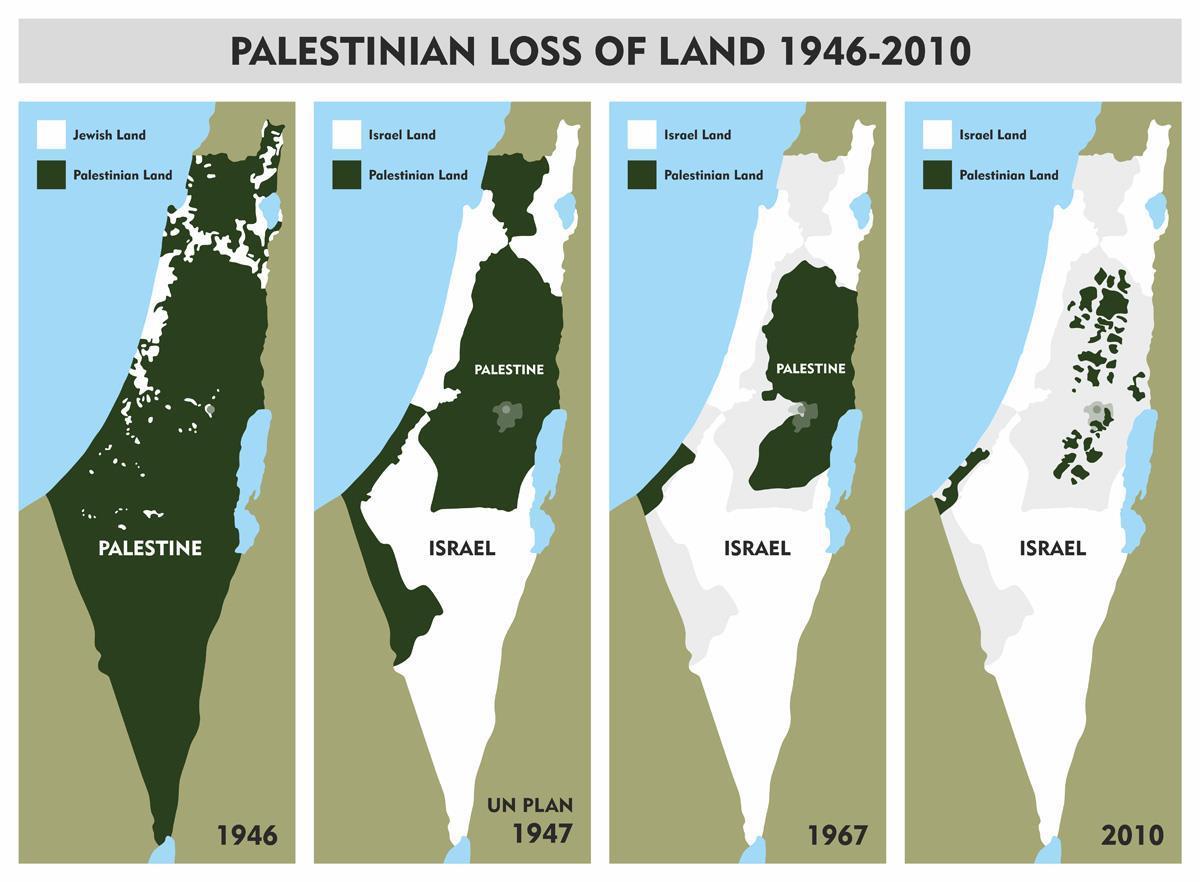
Five Young Palestinians on What It's Like to Live and Die in Gaza - The Daily Beast
Dean Obeidallah

The Hip-Hop Fellow Outtakes: Young Guru on the Rise of Kanye West - NewBlackMan (in Exile)
Mark Anthony Neal

Appeals Court upholds affirmative action in Fisher v. Texas - Politico
Allie Grasgreen

Pirates, the Printing Press, and Global Democracy - Huffington Post
Don Kraus and Logan Cotton

UN to Confront United States on Persistent Racial Discrimination - ACLU
Chandra Bhatnagar

Twitterball - Tech Crunch
Matthew Panzarino

Visualizing a Day in the Life of a New York City Cab - FiveThirtyEight
Chadwick Matlin


Also, this World Cup video is here to give  you all the nostalgia.

Tuesday, June 24, 2014

0 What We're Reading Today (6-24-14)

Apologies, again, for the lack of content coming through on Snakes. I'm working in DC this summer and I have been writing on two other blogs as well. One with my internship at GlobalSolutions.org and the other is a project out of TFA Houston called, "Textual Healing." It was already tough to keep Snakes updated and my writing has been pulled in multiple directions. The positive, though, means I have been reading plenty.

I'm reading Isabel Wilkerson's The Warmth of Other Suns currently. I finished The Brief and Wondrous Life of Oscar Wao before leaving Houston for Chicago. I'm hopeful that I will be traveling more this summer -- perhaps to Boston, Philadelphia, and/or New York. That will give me some more time to dig into Wilkerson's text and perhaps start a new one.

That said, here is what I have been reading the past few days.

Who Gets to Graduate? - New York Times
Paul Tough

A Brazilian Street Artists has Created the First Viral Image from the World Cup - Slate
Jeremy Stahl

How the most ideologically polarized Americans live their lives - Pew
Drew Desilver

Which party is more to blame for political polarization? - Pew
Carroll Doherty

Kendrick Lamar, Hip-Hop's Newest Old-School Star - New York Times
Lizzy Goodman

Q&A: Ta-Nehisi Coates on Reparations, Ignorant Journalism, and Whether He Talks to President Obama - The New Republic
Isaac Chotiner

When Latinos Don't Look at Themselves: Enabling Racialized Language on Spanish-Language US TV - Latino Rebels
Julio Varela

Chart of the Week: The World Cup of (almost) Anything - Pew
Drew Desilver

Inside the Battle for Fair Housing in 1960s Chicago - The Atlantic
Kasia Cieplak-Meyer von Baldegg; Sam Price-Waldman; Paul Rosenfeld

Words, Words, Words: On Toxicity and Abuse in Online Activism - Nuclear Unicorn
Katherine Cross

The Racism Beat - Medium
Cord Jefferson

A game of two halves - Economist

The Lost Innovation History of the Doritos Tacos Locos - The Atlantic
Alexis C. Madrigal

The Case for Reparations: A Narrative Bibliography - The Atlantic
Ta-Nehisi Coates

The Radical Practicality of Reparations - The Atlantic
Ta-Nehisi Coates

The Case for American History - The Atlantic
Ta-Nehisi Coates

The Case for Reparations: An Intellectual Autopsy - The Atlantic
Ta-Nehisi Coates

13 Astounding Numbers About This Year's World Cup - Mother Jones
AJ Vicens and Ian Gordon

Jed Rakoff and the Lonely Fight for Wall Street Justice - The Nation
Sasha Abramsky

The Narcissism of Global Voluntourism - Pacific Standard
Lauren Kascak & Sayantani Dasgupta

New ACLU report takes a snapshot of police militarization in the United States - Washington Post
Radley Balko

How We Play the Game - New York Times

No Country for Old Pervs: The Fall of the Houses of Terry Richardson and Dov Charney - Grantland
Molly Lambert

Thursday, March 20, 2014

1 The Injustice of Grit: Being Twice as Good and Teach for America

Every region in Teach for America adopts its own motto that is meant to describe the region’s “Core Values”. For Houston, we have “Justice. Leadership. 100%.” While I have some issues with one of those values, I have greater issue with a value that seems to have covertly found unofficial membership with the rest: grit.

Grit, as I have understood it, is a certain mental toughness – an aversion to quitting. Grit means that when the going gets tough, you get tougher, so to speak. YES Prep has adopted grit as a central cornerstone of its charter model and I have seen it arrive in the Teach for America Office with greater and greater frequency since joining as a Corps Member. We have to teach our students to be “gritty” because that will help them overcome what they face. I want to foster a sense of “grit” in my students, Corps Members will say.

Though seemingly innocuous, I object to the use of grit as we frame conversations about our students because grit stands in direct opposition to the core value of “justice” in several ways. In particular though, “grit” focuses on overcoming one’s current circumstance; it focuses upon what is and tells those in want of “grit” that they should rise up and overcome. Although you may not have all the advantages, grit would say, you should still push through.

As a mindset for young kids to internalize, I can understand its utility. All students need to have a level of personal accountability and toughness because life is hard. That being said, I wonder if “grit” is something that we should be adopting as an organization, as adults within Teach for America, as folks who are supposed to keep “justice” a top priority as we serve. I wonder if grit aids us in achieving “transformational growth” or if grit binds us to the status quo.

Ultimately, something has to give – either our assessment of “grit” as something that our students do not possess or our commitment to “justice”. Let me explain.

Ta-Nehisi Coates recently wrote a piece about Kim Novak at the Oscars. In it, he references our common discourse on Jackie Robinson. He writes,

“I’ve spent the past couple of years thinking about the ‘twice as good’ notion in the black community, and the bindings that we put on young black boys so that their country will not kill them. Of course ‘twice as good’ ultimately means half as many arrive, and those who do receive half as much. Let us dispense with self-congratulation and great men. The question is not, ‘What did Jackie Robinson achieve in spite of racism?’ It is, “How much more would he have achieved without it?’ “

Coates’s reframing of the conversation allows us to see America’s social landscape more honestly. While we celebrate heroes like Robinson for all that they were able to accomplish in the face of racism and poverty, we should also consider the countless other Jackie Robinsons who were not allowed to flourish because of racism and poverty; we should also consider how much more Robinson could have accomplished in a just world. Racism, poverty, marginalization, and all other oppressions are not the kinds of pressure that forge diamonds. Instead, they are fetters and handicaps that deny humans that opportunity to shine as they otherwise would.

“Grit” is the commentary we currently have about Robinson, but “justice” requires the question that Coates explains.

We can see the same misaligned focus in discussions of other icons.

Barack Obama, undoubtedly, should be celebrated for being America’s first African-American President. What he has achieved is laudable and his time as President should be honored – however, we have to also posit the question, “How much more could Barack Obama have accomplished without racism?” Or, better yet, “How many Barack Obamas has this country stifled through racism, through poverty?”

Hillary Clinton, who looks positioned to be the United States’ first female President, draws similar praise for all that she has accomplished as a woman (read: despite sexism). But in what ways could Hillary have thrived more, accomplished more, if she did not have to combat endemic sexism? What if she, like her male counterparts, could focus less on the cut of her pant-suit and could, instead, focus more on policy? What if showing political aggressiveness was touted as a virtue for her, as it is for men, instead of forcing her to combat chauvinistic depictions of her as a bitch?

Of course, this applies to the discourse that surrounds our students, too.

I remember one Saturday, I stopped at McDonald’s on my way home from a practice test for my teacher certification. I parked my car next to a pick-up truck that was covered in splotches of paint and had its truck bed filled with jagged scraps of metal. This car appeared to me more like something from a demolition derby or Grand Theft Auto than anything that should have been on the road.  Regardless, after parking I walked inside McDonald’s and noticed one of my students, Mauricio, was there with his mother.

I wasn’t entirely sure of the interaction Mauricio and I would have. In school, Mauricio had made his disdain for reading (and for me, by extension), painfully apparent.

After asking him to pick his head up one day, he and I had this exchange:

Me: Mauricio, you need to pick your head up and follow along.
Mauricio: Man, you know what mister, can I ask you a question?
Me: Yes.
Mauricio: You know what I really hate, mister? This class!
Me: Great. So we’re going to fo—
Mauricio: You know what I hate more than this class? You! Hahahaha

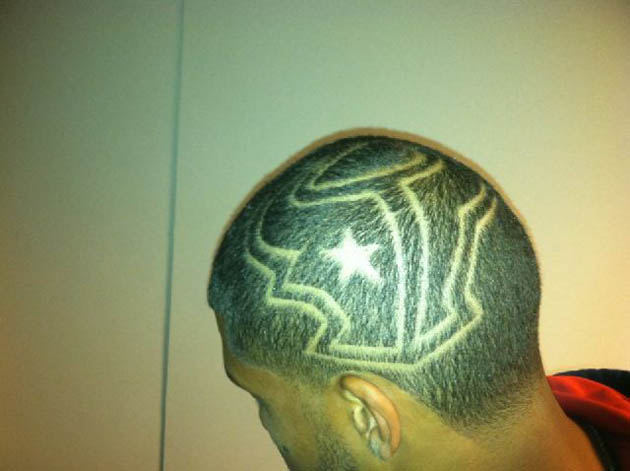
Recently, though, Mauricio had had a breakthrough. His schedule was changed and, consequently, he switched from my reading class to another teacher’s. He began receiving some mentoring from his math teacher and was beginning to enjoy being at school – even going so far as to seek me out one day so I could see his new haircut – one that flaunted a Texans logo etched into his hair

At McDonald’s, I said “Hi” to Mauricio and asked him what he was going to do on his Saturday. He said that he was going to help his mom at work. When I asked him what it was that he would do with his mom he explained that they were going to go, “pick-up metal and, like, find other metal and pick it up, you know?”

I thought about the car outside, realizing that it was Mauricio’s, and thought about the way other students were probably spending their Saturdays – specifically most of the students in my Vanguard (gifted and talented) classes. Although, for the most part, they were engaged in extracurricular activities and some type of recreational time, here was Mauricio spending his Saturday picking up scraps of metal and loading it into a pick-up truck.

I think it is incredible that Mauricio is making growth as a reader. I think that all of his accomplishments despite the poverty in which he lives are only greater reason to celebrate them. I think it is wonderful that Mauricio, now, asks his mom to let him stay at school on days when he might be picked up early because he, “figures that there are some things he should learn [at school].”

One thing I cannot say is that Mauricio lacks grit. He isn’t in want of toughness. He possesses much more than I did at that age. And when I think about this abstract concept of “grit,” what does it really mean in Mauricio’s case?

Is TFA actually helping students like Mauricio if our suggestions to him are simply that he toughen-up? And what, then, becomes our role as we enter Mauricio’s community? This conception of “grit” positions us as external saviors who are entering communities (largely poor and largely of-color) with this “virtue” that these communities lack. Grit, as we currently employ it, says that our students are internally deficient, that they are not rising-up as opposed to being held down. Grit, its implications, and the way it is employed indicate a project that is colonial, rather than compassionate, in nature.

Mauricio is not deficient. He is disadvantaged because of the privileges that his peers enjoy. He was born into a trajectory that would position him to struggle so that wealthier, whiter, and more advantaged students would be positioned to thrive. The child is not lacking grit. He is lacking opportunities, and the resources necessary to fully seize those opportunities.

So I would say, then, that any commitment to “justice” that Teach for America wants to maintain must consider more than simply instilling asense of “grit” in students who are already surviving conditions that most Corps Members never had to face.  As an organization, “grit” cannot be something we prioritize if actual justice is to exist. Grit tells students like Mauricio that they must be twice as good; grit treats systemic oppression as a constant that must be overcome rather than changed; grit perpetuates racism and classism and does little to actually change outcomes for disadvantaged communities.

Justice, conversely, calls upon Corps Members to be advocates for their students. And in being an “advocate,” this means that Corps Members within Teach for America, as well as the organization, must push to change the playing field. Advocacy means that Mauricio's teachers should not tell him simply to be tougher. Rather, advocacy means that we identify the injustice – that Mauricio is under-resourced, has to work on weekends, and is not being given ESL support at school – and leverage our privilege to change the outcomes for the community. As I have begun to say, our duty is to loosen the noose. We must loosen the noose of oppression.

As Coates points out, the notion of being “twice as good” has long existed in the black community. There are many lessons that black parents give their sons and daughters to indicate to them that American society has an added list of requirements for those within non-white bodies to be given access to various opportunities.


 Pray, do not mistake this as an argument against striving for excellence. Excellence, of course, is something that we should all seek to achieve. I simply posit that there is no justice in simply telling black and brown kids that they have to be twice as good as their white peers in order to reach the same markers of success.

As an organization, TFA should eschew grit. Instead of directing energy toward fostering this nebulous trait within students who, frankly, are already remarkably stalwart in the face of hardship, the organization should promote justice for the students it serves. TFA should come off its laurels and use its brand, lobbying power, and Corps Members to advocate for policy and changes that will benefit its students. Teach for America should be defending Affirmative Action. Teach for America should push for immigration reform. Teach for America and its Corps Members should be enfranchising voters – especially when our students’ communities are thosebeing left in the dark.

Ultimately, “grit” is unsuitable as a value that underpins Teach for America’s mission to deliver “transformational change” for its students. It is unsuitable in any conversation in which justice is central. Grit views the communities that Teach for America serves as lacking. Grit ignores the structural barriers that deny students access to higher education. Grit, in its well-intentioned goal to teach students to “rise up and overcome,” offers our students’ detractors a convenient excuse for our students’ plight: “Alas, it is not privilege or advantage that ultimately pushes wealthier, predominantly white, students to success! It is the lack of character that exists in the poor communities of color.” Grit, then, is the newest design in oppression’s collection, an attempt to portray the most disadvantaged as being responsible, in some way, for their own marginalization.

Justice, conversely, cannot co-exist with grit because justice understands that structural inequalities position people for different levels of success well before they have the agency necessary to make choices, to exhibit or not-exhibit “grit” in any sense.

Grit tells students to make a five-star meal with little more than a stone and a pot of water. Our students deserve better than stone soup. Justice, not grit, argues for these children to have a well-stocked pantry.

Grit directs attention toward the exceptional, the “rose that grew from concrete.” But even in honoring this one rose, could we reasonably blame the other flowers for not pressing through the pavement above them?


A grit-inclined perspective would simply appreciate the one flower for having toiled through the pavement. Justice, on the other hand, sees the one rose and asks, “How much taller could this have grown without the stone above?” Justice would begin breaking apart the concrete so that the whole garden could blossom.

Tuesday, June 18, 2013

0 What We're Reading Today (6-18-13)

Being a good student in the back of this TFA session.

You Are The Second Person - Guernica Mag
Kiese Laymon

Arizona Gets Rare Smackdown From Justice Scalia - The Atlantic
Garrett Epps

How Caffeine Can Cramp Creativity - New Yorker
Maria Konnikova

The 4 Weapons of Exceptional Creative Leaders - Fast Company
Charles Day

Jay-Z's Android Deal Shows How Race Colors Smartphone Market - Color Lines
Jamilah King

Linking Home and Classroom, Oakland Bets on Community Schools - The Atlantic
Trey Bundy and Sarah Butrymowicz

False Accuser Ordered to Pay Banks $2.6 Million after Sending Him to Prison - Your Black World
Dr. Boyce Watkins

How Do You Teach the Civil Rights Movement? - NPR Code Switch
Cory Turner

For People of Color, a Housing Market Partially Hidden From View - NPR Code Switch
Gene Demby

The 35 Most Spectacular Wildlife Photos From the National Geographic Photo Contest - Buzzfeed
Summer Anne Burton

Battle-Tested Tips for Effective Explanations - Harvard Business Review
Lee LeFever

Assata Shakur: Prisoner in the United States (An Interview) Parts I (here) and II (here) - Prison Culture

Why the Spying Scandal Is a Serious Racial Justice Issue - Color Lines
Imara Jones

A New Definition of Fatherhood - Color Lines
Julianne Hing

GOP in the Lions' Den: Why Do Republicans Talk to Liberal Media - The Daily Beast
David Freedlander

Study Drugs Under Fire: Can Chuck Schumer Stop 'Academic Doping'? - The Daily Beast
Caitlin Dickson

via The Daily Beast

Sunday, June 2, 2013

0 What We're Reading Today (6-2-13)

Happy June, everybody!  In the next few days, be on the lookout for a little update from Snakes on McCain that will summarize what we have planned moving forward.  Thanks for all the love, everyone and welcome to summer!

Breadwinning Wives and Nervous Husbands - New York Times
Richard H. Thaler

Black Chicago in the 1970s, Through the Lens of John H. White - Chicago Magazine
Whet Moser

I'm Biracial, and That Cheerios Ad Is a Big Fucking Deal. Trust Me. - Jezebel
Meagan Hatcher-Mays

Istanbul Erupts In Violence After Protests Against Razing Of Gezi Park - The Daily Beast
Mike Giglio

Zimmerman Lawyers Admit Misstep - The Daily Beast

What If George Zimmerman Were Black? - The Daily Beast
Allison Samuels

The Inside Story Of The Harvard Dissertation That Became Too Racist For Heritage - Think Progress
Zack Beauchamp

Beyoncé's Chime for Change: Concert to Advocate for Girls' Rights - The Daily Beast
Tom Sykes

The Racist Redskins - The Daily Beast
Michael Tomasky

Black women heavier and happier with their bodies than white women, poll finds - Washington Post
Lonnae O'Neal Parker

Can Technology Pave the Road for Peace in the Middle East - The Atlantic
David Rohde

How Meals Win Wars - The Atlantic
D.B. Grady

Who Even Needs the Nation-State in the 21st Century - The Atlantic
Eric Schnurer

How Did Work-Life Balance in the US Get So Awful? - The Atlantic
Derek Thompson

How the Protests Will Impact Turkey at Home and Abroad - The Atlantic
Victor Kotsev

Why the Hell Are There So Many High School Valedictorians? - Jezebel
Doug Barry

Americans Are Just Not Happy - Gawker
Max Rivlin-Nadler


Monday, May 27, 2013

0 What We're Reading Today (5-27-13)

First and foremost, we would like to recognize the contribution of those for whom Memorial Day exists.  We would have said "Thanks" but my buddy who is a Marine, Vijay, said that is one of the most difficult things to say to someone who has served and he wished people wouldn't say thank you as much as they would just recognize his service.

Global War on Terror, R.I.P. - The Nation
Bob Dreyfuss

The AP's Privacy, and Ours - The Nation
David Cole

The Secret Donors Behind the Center for American Progress and Other Think Tanks - The Nation
Ken Silverstein

Letter to 'The Nation' From a Young Radical - The Nation
Bhaskar Sunkara

College Grads Are Jobless In China's 'High Growth' Economy - Forbes
Gordon G. Chang

How to Save the GOP - The Atlantic
Molly Ball

Ryanair: Is it really Europe's most punctual airline? - BBC
Charlotte McDonald

Ask Alison: When to Get a Number, Replacing Dogs, and Long-Distance Confrontation - The Atlantic
Alison Agosti

The World Still Needs American Muscle - Real Clear World
Robert Kaplan

The Promise of Africa - Real Clear World
Ian Shapiro

Five Television Shows Shaping World Politics - Real Clear World

Wayne Miller, Photographer Who Captured Black Chicago, Dies - NPR
Allison Keyes

Europe to demand structural reform over austerity - Guardian
Reuters

PA: No political concessions for economic benefit - Jerusalem Post
Staff

Trying to Revive Mideast Talks, Kerry Pushes Investment Plan for West Bank - New York Times
Michael R. Gordon and Jodi Rudoren

Confessions of a Stay-at-Home Dad - Wall Street Journal
Laura Kreutzer

Who Will Crack the Code? - New York Times
David Leonhardt

California Faces a New Quandry, Too Much Money - New York Times
Adam Nagourney

Every Trader and Investor Should Be Watching the Dollar - Minyanville
Tom Pizzuti and Kurt Hulse

via Real Clear World

Thursday, April 4, 2013

0 What We're Reading Today (4-4-13)

Wednesday, March 27, 2013

0 What We're Reading Today (3-27-13)

Monday, March 25, 2013

0 What We're Reading Today (3-25-13)

Wednesday, November 28, 2012

0 Thin Ice: Stereotype Threat and Black College Students

This is an old piece from The Atlantic in 1999 that detailed a study conducted at Stanford about black college students and their interaction with stereotype threat.  I am part-way through the piece right now but would certainly encourage folks concerned with social justice, education, psychology, and American Studies to read it.

Full article here


When capable black college students fail to perform as well as their white counterparts, the explanation often has less to do with preparation or ability than with the threat of stereotypes about their capacity to succeed. Educators at Stanford who tested this hypothesis report their findings and propose solutions 

In recent years this debate has acquired a finer focus: the fate of middle-class black students. Americans have come to view the disadvantages associated with being black as disadvantages primarily of social and economic resources and opportunity. This assumption is often taken to imply that if you are black and come from a socioeconomically middle-class home, you no longer suffer a significant disadvantage of race. "Why should the son of a black physician be given an advantage in college admission over the son of a white delivery-truck driver?" This is a standard question in the controversy over affirmative action. And the assumption behind it is that surely in today's society the disadvantages of race are overcome when lower socioeconomic status is overcome. 
But virtually all aspects of underperformance—lower standardized-test scores, lower college grades, lower graduation rates—persist among students from the African-American middle class. This situation forces on us an uncomfortable recognition: that beyond class, something racial is depressing the academic performance of these students.
Some time ago I and two colleagues, Joshua Aronson and Steven Spencer, tried to see the world from the standpoint of these students, concerning ourselves less with features of theirs that might explain their troubles than with features of the world they see. A story I was told recently depicts some of these. The storyteller was worried about his friend, a normally energetic black student who had broken up with his longtime girlfriend and had since learned that she, a Hispanic, was now dating a white student. This hit him hard. Not long after hearing about his girlfriend, he sat through an hour's discussion of The Bell Curvein his psychology class, during which the possible genetic inferiority of his race was openly considered. Then he overheard students at lunch arguing that affirmative action allowed in too many underqualified blacks. By his own account, this young man had experienced very little of what he thought of as racial discrimination on campus. Still, these were features of his world. Could they have a bearing on his academic life? 
My colleagues and I have called such features "stereotype threat"—the threat of being viewed through the lens of a negative stereotype, or the fear of doing something that would inadvertently confirm that stereotype. Everyone experiences stereotype threat. We are all members of some group about which negative stereotypes exist, from white males and Methodists to women and the elderly. And in a situation where one of those stereotypes applies—a man talking to women about pay equity, for example, or an aging faculty member trying to remember a number sequence in the middle of a lecture—we know that we may be judged by it.

Monday, November 26, 2012

0 What We're Reading Today (11-26-12): America & the (New) Mid-East, Mexican Mayor Abducted and Stabbed, FoxConn

Monday, November 19, 2012

0 What We're Reading Today (11-19-12) #2: Freestyle Rap, Education Policy and Race, and Why You Shouldn't Talk to Strange White Folks about Race

Read a Book! Or, Why I don't Talk to Strange White Folks about Race - Black Girl Dangerous
Mia McKenzie

The Origin of the Phrase "Women of Color" - Loretta Ross
"People of Color (POC)" "Women of Color (WOC)" and "Men of Color (MOC)" are not biological destinies. These are political designations. So when we speak of POC, we are not talking about all racial minorities, we speaking with and to folks who are committed to "working in collaboration with other oppressed racial groups who have been “minoritized" by white supremacist institutions.  - Tabias Wilson (BlaQueerPoz)
Viewpoint: What's Behind Cornel West's Attacks on Obama - Time
Touré

Obama Won. Now it's time to change the system. - The Nation
Peter Dreier and Donald Cohen

Should Schools Set Different Goals for Children of Different Races? - The Atlantic
Emily Richmond

For Australian Aborigines, the Health Problems of Westernization - The Atlantic
Edward Small

The Neuroanatomy of Freestyle Rap - The Atlantic
Lindsay Abrams

New Research Shows African-American Cities are the Source of much Modern Slang - The Grio
Alexis Stodghill

Do Men Always want to Sleep Around - Slate
Amanda Marcotte


0 What We're Reading Today (11-19-12): Gaza, Education in Massachusetts, McKayala Maroney & Obama, and more Gaza

Finally, finally, finally, I have my laptop back. Props to Alex Kolodner of Tufts UIT for fixing it for me.  He and the crew at Tufts Online are saviors and also helped me save like $500 through their repair.  Many thanks and many beers to you all.

That said, let's get back into the swing of things.  Here is what we're reading today.

We in the Gaza Strip will not Die in Silence - The Guardian
Musa Abumarzuq

Geo-Politics and Dead Babies - The Daily Beast
Andrew Sullivan

Mashed Potatoes, Hummus, and Settler Colonialism - The Tufts Daily
Matthew Parsons

Turkey's Erdogan: Israel carrying out "terrorist acts" - The Daily Star
Reuters

A Report from Gaza Under Siege - The Nation
Mohammed Omer

Israeli Iron Dome Stops a Rocket with a Rocket - The New York Times
Isabel Kershner

Economic Costs of Gaza Fighting - Jerusalem Post
Felice Friedson, Linda Gradstein, The Media L

Small Arms, Big Problems - Foreign Policy
Damien Spleeters
** I only lightly skimmed this piece and think I need to revisit it.  I may have misread but some of the author's implications irked me

The battle between Israel and Gaza solves nothing - The Guardian
Jonathan Freedland

Report: Mass. Cuts Tuition for Illegal Immigrants - Politico
Kevin Robillard

Maroney: "Obama asked for 'the face'" - Politico
Caitlin McDevitt

Via Son of Baldwin (here)


Snakes On McCain Copyright © 2011 - |- Template created by O Pregador - |- Powered by Blogger Templates