Showing posts with label Race. Show all posts

Monday, October 5, 2015

3 What We're Reading Today (10-5-15)

The Populist Prophet - The New Yorker
Margaret Talbot

Bernie Sanders, the Socialist Mayor  - The Atlantic
Russell Banks

The Breakdown of the Black Family  - The Atlantic
Kay Hymowitz

First, Let's Get Rid of All the Bosses  - The New Republic
Roger D. Hodge

Obama, Guns, and the Politics of Hopelessness - The New Yorker
John Cassidy

Many Former Foster Youths Don't Know They Have Health Care - NPR
Ray Glier

Our George Wallace - Slate
Jamelle Bouie

Jeb Bush, 'Free Stuff' and Black Folks - NY Times
Charles Blow

The Death of Evan Murray - Grantland
Charles Pierce

The Slave-State Origins of Modern Gun Rights - The Atlantic
Saul Cornell and Eric M. Ruben

The Data Are Damning: How Race Influences School Funding - The Atlantic
Gillian B. White

New York Police Will Document Virtually All Instances of Force - NY Times
Al Baker and J. David Goodman

Black patients fare better than whites when both get same healthcare, study finds - Los Angeles Times
Alan Zarembo

Arne Duncan's Wars - Politico
Michael Grunwald

Jorge Ramos' Long Game - NY Times
Marcela Valdes

The American Dream Shatters in Prince George's County - Washington Post
Michael Fletcher

Senate Strikes Compromise on Criminal Justice Reform - Politico
Rachael Bade, Daniel Lippman, and Sarah Wheaton

Henry Dumas Wrote About Black People Killed By Cops. Then He Was Killed By A Cop. - NPR
Beenish Ahmed

Inside the ISIS Blueprint for Winning - The Daily Beast
William McCants

Thursday, September 24, 2015

0 What We're Reading Today (9-24-15)

The Washington Region Needs Bold Commitments to End the Housing Crisis - Greater Greater Washington
David Bowers  (read the comments, as well)

White Out: Why integrating America's neighborhoods and cities is harder than we think - Slate
Jamelle Bouie

Eyes all sticking like honey on bees - Matt's Newsletter
Matthew Yglesias

Black patients fare better than whites when both get same healthcare, study finds - LA Times
 Alan Zarembo

What Rugby Can Teach America About Honoring Indigenous Culture - The Atlantic
 Jake Flanagin

Political scientists think "the party" will stop Trump. They shouldn't be so sure. - Vox
Andrew Prokop

What Does Success Look Like for Pope Francis? - Five Thirty Eight
Five Thirty Eight

What Congress Really Thinks of the Pope - Politico
Katelyn Fossett

As Others Flee to West, Most Syrian Refugees Remain in Region - NY Times
Jodi Rudoren

A Modest Proposal - The New Yorker
David Sedaris

How Conservatives Explain Away Republican Islamophobia - New York Magazine
Jonathan Chait

Why I Still Think Fiorina Was a Terrible CEO - Politico
Jeffrey Sonnenfeld

The Importance of Donald Trump  - New York Magazine
Frank Rich

Bait and Switch - Harpers
Clare Malone

Here's What the White House's Behavioral Sciences Team Discovered in Its First Year - New York Magazine
Jesse Singal

The Thucydides Trap: Are the U.S. and China Headed for War?  - The Atlantic
Graham Allison

The Black Family in the Age of Mass Incarceration - The Atlantic
Ta-Nehisi Coates

The Power of Public Housing - The Atlantic
Alana Semuels

Moynihan, Mass Incarceration, and Responsibility - The Atlantic
Ta-Nehisi Coates

Monday, September 14, 2015

0 What We're Reading Today (9-14-15)

The Anti-Redskin - The Atlantic
Ariel Sabar

The Intersection of Faith and Politics - The Atlantic
Erin Kotlan

The vengeful god of Kim Davis: The powerful forces we ignore when we fixate on one Kentucky clerk - Salon
Brittney Cooper

A Brief Visual History of Weapons - The Atlantic

Mark Zuckerberg and the End of Language - The Atlantic
William Davies

Scare Headlines Exaggerated The US Crime Wave - Five Thirty Eight
Carl Bialik 

Why I Put My Wife's Career First - The Atlantic
Andrew Moravcsik

Think Out Loud - The New Repulic
Michael Eric Dyson

Paid Leave's Champions This Week: Obama, Hilton Hotels, and Saudi Arabia - The New Republic
Esther Breger

Parenting Shouldn't Be About Self-Sacrifice, Whatever Your Income - The New Republic
Stacia L. Brown

The First New Subway Stop Since 1989 - New York Times
Emma Cott and Colin Archdeacon

America's Teaching Force, by the Numbers - The Atlantic
Laura McKenna

The Staggering Scale of Germany's Refugee Project - The Atlantic
Heather Horn

Enter the 'Smarmonym' - The Atlantic
Megan Garber

How to Evaluate the Economic Records of Governors Who Want to Be President - Five Thirty Eight
Ben Casselman

Boston Then and Now: 1888-2015 - The Atlantic
Alan Taylor

By: John Cueno

Saturday, December 6, 2014

0 What We've Been Reading Recently - Mike Brown, Eric Garner, #BlackLivesMatter, and more (UPDATE: 12/16/14)

A compilation of what I've been scouring on the InterWeb. It's by no means comprehensive or the most wonderful collection of links, posts, etc., but it's something to reference that shouldn't drive up your data charges like fracking through someone's Facebook Timeline.

UPDATED: 12-16-14 (11:05 PM Central)

Off Target on Toy-Gun Regulation - New York Times
Jay Caspian Kang

Cleveland police shot and killed 12 year-old Tamir Rice as he carried toy gun - Vox
German Lopez

How to Uphold White Supremacy by Focusing on Diversity and Inclusion - Model View Culture
Kyra

Another March on Washington? After Ferguson, 'That's not change. That's just church.' - The Guardian
Steven W. Thrasher

From Ferguson and New York, the Most Impactful Protest Art in America - Voice Project

The Hidden Trauma Plaguing American Kids - Think Progress
Sam P.K. Collins

Schools' Discipline for Girls Differs by Race and Hue - New York Times
Tanzina Vega

Latina reproductive justice advocates condemn police violence against Black communities, endorse national march - Latina Institute
Loretta Kane

Unequal Treatment of 2 Protesters in Eric Garner Case, One White and One Black - New York Times
Jim Dwyer

The Fierce Urgency of Now: Why Young Protesters Bum-Rushed the Mic - The Root
Kirsten West Savali

Video shows John Crawford's girlfriend aggressively questioned after Ohio police shot him dead in Walmart - The Guardian
Jon Swaine

Chicago gave hundreds of high-risk kids a summer job. Violent crime arrests plummeted. - The Washington Post
Emily Badger

Why I chose not to march in DC - The Grio
Jessica Pierce

At Nets' Game, a Plan for a Simple Statement Is Carried Out t a T - New York Times
Scott Cacciola

In N.C., death of black teen raises question: Was it suicide or a lynching? - Washington Post
Todd C. Frankel

The Wealth Gap Between Whites and Minorities Is Growing - Five Thirty Eight
Ben Casselman

Data Shows Racial Profiling Increasing In Searches During Motor Vehicle Stops - Rhode Island ACLU

Rumain Brisbon Is Just the Latest to Be Shot Dead by a Cop Over a Phantom Gun - Mother Jones
Jaeah Lee

When Police 'Reforms' Only Legitimize Police Abuses - In These Times
Michael Collins

Sharpton Responds to Criticism That His Movement Excludes Younger Activists - The Root
Jamal Watson

UPDATED: 12-10-14 (1:59 AM Central)

Lessons from Camden - The Economist

Black Life is More - Tufts Observer
Kris Manjapra

St. Louis Police Pursue Assault Charge Against Youngest Member of Ferguson Commission - Huffington Post
Ryan J. Reilly

Feature: 'To My Unborn Son' - Afropunk

Viewpoint: Why Eric Garner was Blamed for Dying - BBC
Stacey Patton

Illinois General Assembly Revives Recording Ban - Illinois Policy
Jacob Huebert

Police Kill Black Women All the Time, Too -- We Just Don't Hear About It - Bustle
Evette Dionne

Eric Garner's widow Esaw on protesters: 'Keep fighting for what's right, to get justice.' - NY Daily News
Erik Badia, Richard Shapiro

Tips for Being an Unarmed Black Teen - The Onion

25 Activities Black People Should Avoid Around Cops - New York Magazine
Katie Zavadski

On the Cheapness of Life - The Atlantic
Ta-Nehisi Coates

An Open Letter of Love to Black Students: #BlackLivesMatter - Black Space Blog
Editorial

Turning rage to action: Indict Tufts seeks to shatter silence, fight anti-blackness - Tufts Daily
Lily Sieradzki

Ripping Apart the Chicago Gun Violence Myths, Part 1: Racism - Forward Progressives
Jasdye

Prosecutors and police: The inherent conflict in our courts - MSNBC
Letitia James

#CrimingWhileWhite, #AliveWhileBlack ignite conversation about white privilege - CBC
Anna Maria Tremonti

Ghostface Killah is Sick and Tired of Police Brutality in America - Vice
Zach Schwartz

At Eric Garner Protests, Some White Activists Are Being Called Out for Their Behavior - Village Voice
Katie Toth

A police officer's open letter to black protesters - The Grio
Officer Sanders

Applying 'Broken Windows' to the Police - The Atlantic
Conor Friedersdorf

Faculty whiteness complicates the classroom - Brown Daily Herald
Emma Harris and Joseph Zappa


UPDATED: 12-7-14 (7:39 PM Central)

A Cambridge March on 12/5/14 Organized by Tufts Students. Black Lives Matter. - YouTube
Nadeem Mazen

Black Brunch - Black Lives Matter: Oakland

Reporter questions Derrick Rose over 'I Can't Breathe' shirt. Thinks player is inarticulate. - The Grio
Jamilah Lemieux

Do #BlackLivesMatter to White Athletes? Let's Ask Them. - The Nation
Dave Zirin

In California, a Champion for Police Cameras - New York Times
Ian Lovett

Even When Police Do Wear Cameras, Don't Count on Seeing the Footage - City Lab
Sara Libby

The Problem with Police Cameras - Jacobin
Shaun Ossei-Owusu

Not Every Flash Mob has the Guts to Do What They Did. Whoa. - Upworthy
Erica Williams-Simon

Reggie Bush, Johnson Bademosi, wear 'I Can't Breathe' Slogan - Washington Times
Jessica Chasmar

Black Hollywood Speaks Out about Police Violence - Color Lines
Jamilah King

I Can't Afford Despair (VIDEO) - Color Lines
James Baldwin

Black Trans Woman Killed while Pounding on Door for Help - Color Lines
Jamilah King

UC Berkeley's Black Student Union Stages 4.5-hour Campus Sit-In - Color Lines
Jamilah King

Mike Brown, Eric Garner, and how my US Passport makes everything ok. - (Im)migrating With a Purpose

Women of Color and the Hidden Trauma of Police Brutality - The Nation
Marie Myung-Ok Lee

Looking for the Effects of the Black Friday Boycott - NY Times
Jeff Sommer

How Municipalities in St. Louis Co., MO, Profit from Poverty - Washington Post
Radley Balko

Get Out of Jail, Inc. - New Yorker
Sarah Stillman

The Expanding World of Poverty Capitalism - NY Times
Thomas B. Edsall

12-6-14

What President Obama told me about Ferguson's movement: think big, but go gradual - The Guardian
Philip Agnew

Barack Obama, Ferguson, and the Evidence of Things Unsaid - The Atlantic
Ta-Nehisi Coates

No One Wanted to Talk About Bill Cosby's Alleged Crimes Because He Made White America Feel Good About Race - The New Republic
Rebecca Traister

My Vassar College Faculty ID Makes Everything Ok - Gawker
Kiese Laymon

White America's Scary Delusion: why its sense of black humanity is so skewed - Salon
Brittney Cooper

The Old Jim Crow - The Atlantic
Ta-Nehisi Coates

On Ferguson Protests, the Destruction of Things, what Violence Really Is (And Isn't) - Black Girl Dangerous
Mia McKenzie

In Defense of Looting - The New Inquiry
Willie Osterweil

The Cosby Show - The Atlantic
Ta-Nehisi Coates

The Cutthroat World of Elite Public Schools - The Atlantic
Alia Wong

The Worst of White Folks - Gawker
Kiese Laymon

Driving with Blindspots: A Reflection on Ferguson - Wright and Left
Greg Wright

Cellphone Rights Guide for Protesters - Slate
Lily Hay Newman

Grand Jury to hear stairwell shooting case - Al Jazeera

MHP: A decade of black bodies felled by police bullets - MSNBC
Melissa Harris-Perry

@PrisonCulture comments on #CrimingWhileWhite - Twitter
Prison Culture

Clair Huxtable is Dead - Crunk Feminist Collective
Brittney Cooper

Michael Brown spent his last day with his friend Dorian Johnson. Here's what Johnson saw. - Vox
Ezra Klein

Officer Darren Wilson's story is unbelievable. Literally. - Vox
Ezra Klein

Mike Brown, Darren Wilson, Ferguson Transcripts - NY Times

Who Really Burns: Quitting a Deans Job in the Age of Mike Brown - Jezebel
Eve Dunbar

Fatal Police Encounters in New York City - NY Times
Eba Hamid & Benjamin Mueller

It Is Time We Treat Police Brutality as a National Crisis - Gawker
Jason Parham

A Herstory of the #BlackLivesMatter Movement by Alicia Garza - The Feminist Wire
Alicia Garza

In Unpredictable New York Protests, Organized Criticism of Police - NY Times
Marc Santora & Al Baker

To My People - The Talking Drum
Assata Shakur

Charles Barkley and the Plague of 'Unintelligent Blacks' - The Atlantic
Ta-Nehisi Coates

Assata Shakur: Prisoner in the United States (Interview Part I) - Prison Culture
Prison Culture

Justice Department Uncovers Absurd Levels of Police Brutality in Cleveland Police Force - Think Progress
Ian Millhiser

10 Years of President Obama talking About Race - CNN

The Dysfunctional and the Disappearing: Democracy, Race ,and Imprisonment - Brown University
Joy James

Hope and Anger at the Garner Protests - NY Times
Brent Staples

Questlove Urges Artists to Write More Protest Songs - Color Lines
Jamilah King

Black Lives Matter / Black Life Matters: An Conversation with Patrisse Cullors and Darnell L. Moore - The Feminist Wire
Monica J. Caspter

On Toni Cade Bambara and the Darren Wilson Jury Decision - The Feminist Wire
Aisha Shahidah Simmons & Heidi R. Lewis

#CrimingWhileWhite is Exactly What's Wrong with White Privilege - The Guardian
Jessica Valenti

Killing Rage: Ending Racism - bell hooks

The Condemnation of Blackness - Khalil Gibran Muhammad

The Warmth of Other Suns - Isabel Wilkerson

Warfare in the American Homeland - Joy James

Rise of the Warrior Cop - Radley Balko

Black Skin, White Masks - Frantz Fanon

Black Power - Stokely Carmichael

Black Jacobins - CLR James

Racecraft: The Soul of Inequality - Karen E. Fields & Barbara J. Fields


Wednesday, July 30, 2014

0 What We're Reading Today (7-30-2014)

Here's Proof That the Anti-Abortion Movement Is Winning - The New Republic
Lane Florsheim

The New Yorker Stories You Should Read Before the Paywall Goes Up - Slate
Eliza Berman and Slate Staff

The Girls Obama Forgot - NY Times
Kimberle Williams Crenshaw

Time for an Equal Rights Amendment - Politico
Alexandra Brodsky and Elizabeth Deutsch

Moms Winning the Common Core War - Politico
Stephanie Simon

Get Out of Jail, Inc. - The New Yorker
Sarah Stillman

Sympathy for the Overdog - Slate
Luke O'Neil

RAND Helps to Develop From Coverage to Care, a New CMS Initiative - RAND
Laurie T. Martin and David M. Adamson

Transit of Tomorrow - Chicago Magazine
Adam Doster

Whiteness Is Still a Proxy for Being American - The Atlantic
Peter Beinart

The Unforgotten - Boston Globe
Maria Sacchetti

Syria's War Poets - The Atlantic
Elliot Ackerman

Israel Creates 'No Man's Land' in Gaza, Shrinking Strip by 40 Percent - The Daily Beast
Jesse Rosenfeld

40 Charts that explain money in politics - Vox
Andrew Prokop

The American Idea at War - The Atlantic
James Bennet

Satanists Troll Hobby Lobby - The Atlantic
Emma Green

The New York Times Is a Great Company in a Terrible Business - The Atlantic
Derek Thompson

The Port Authority Thinks It Owns the New York City Skyline - CityLab
Polly Mosendz

Psychologists Find a Surprising Thing Happens to Kids Who Read Harry Potter - Arts Mic
Tom McKay


Monday, July 21, 2014

0 What We're Reading Today (7-21-14)

Thursday, July 17, 2014

0 What We're Reading Today (7-17-14)

Jameelah has been harassing me everyday to give her articles to read. Jameelah, here is the dump. This should be like 20+ articles for  you and the rest of The Horde to consume. Happy reading and happier summers to everyone.

With Friends Like These... On the Military Occupation of Chicago - Prison Culture

What We Talk About When We Talk About Violence in Chicago - NPR
Gene Demby

Kafka's Joke Book - McSweeney's
John McNamee

Which Supreme Court Justices Vote Together Most and Least Often - NY Times
Jeremy Bowers, Adam Liptak, Derek Willis

The Democrats Are Finally Turning Away from Israel - Foreign Policy
Michael A. Cohen

Democracy, Freedom, and Apple Pie Aren't a Foreign Policy - Foreign Policy
Stephen M. Walt

Newspapers That Aren't Dying - The Atlantic
Devjyot Ghoshal

The Survivor: How Eric Holder outlasted his (many) critics - Politico
Glenn Thrush

Why Poor Schools Can't Win at Standardized Testing - The Atlantic
Meredith Broussard

Lionel Messi Is Impossible - FiveThirtyEight
Benjamin Morris

Behind Harry Reid's war against the Koch Brothers - Politico
Kenneth P. Vogel

The World Cup of Dirty Dreams: Inside Brazil's Most Infamous Brothel - Rolling Stone
Amos Barshad

Brazil's 'Quilombo' Movement May Be The World's Largest Slavery Reparations Program - Huffington Post
Roque Planas

Deadly Embrace - London Review of Books
Jacqueline Rose

Florida Deja Voodoo - Slate
Ron Klain

Talking Openly About Obama and Race - New Yorker
Jelani Cobb

Thanks to Urbanization, Tomorrow's Megalopolises Will Be in Africa and Asia - Foreign Policy
Reid Standish

Black Chicago Divided - In These Times
Salim Muwakkil

Blood in the Streets: A Conversation About Gun Violence in Chicago - Gawker
Jason Parham

Love in the Time of Racism - Ada New Media
Darnell Moore and Monica J. Casper

Always on the Side of the Egg - Haaretz
Haruki Murakami

Why One of the Biggest LGBT Orgs Has Stopped Supporting ENDA - Advocate
Rea Carey

Five Young Palestinians on What It's Like to Live and Die in Gaza - The Daily Beast
Dean Obeidallah

The Hip-Hop Fellow Outtakes: Young Guru on the Rise of Kanye West - NewBlackMan (in Exile)
Mark Anthony Neal

Appeals Court upholds affirmative action in Fisher v. Texas - Politico
Allie Grasgreen

Pirates, the Printing Press, and Global Democracy - Huffington Post
Don Kraus and Logan Cotton

UN to Confront United States on Persistent Racial Discrimination - ACLU
Chandra Bhatnagar

Twitterball - Tech Crunch
Matthew Panzarino

Visualizing a Day in the Life of a New York City Cab - FiveThirtyEight
Chadwick Matlin


Also, this World Cup video is here to give  you all the nostalgia.

Tuesday, June 24, 2014

0 What We're Reading Today (6-24-14)

Apologies, again, for the lack of content coming through on Snakes. I'm working in DC this summer and I have been writing on two other blogs as well. One with my internship at GlobalSolutions.org and the other is a project out of TFA Houston called, "Textual Healing." It was already tough to keep Snakes updated and my writing has been pulled in multiple directions. The positive, though, means I have been reading plenty.

I'm reading Isabel Wilkerson's The Warmth of Other Suns currently. I finished The Brief and Wondrous Life of Oscar Wao before leaving Houston for Chicago. I'm hopeful that I will be traveling more this summer -- perhaps to Boston, Philadelphia, and/or New York. That will give me some more time to dig into Wilkerson's text and perhaps start a new one.

That said, here is what I have been reading the past few days.

Who Gets to Graduate? - New York Times
Paul Tough

A Brazilian Street Artists has Created the First Viral Image from the World Cup - Slate
Jeremy Stahl

How the most ideologically polarized Americans live their lives - Pew
Drew Desilver

Which party is more to blame for political polarization? - Pew
Carroll Doherty

Kendrick Lamar, Hip-Hop's Newest Old-School Star - New York Times
Lizzy Goodman

Q&A: Ta-Nehisi Coates on Reparations, Ignorant Journalism, and Whether He Talks to President Obama - The New Republic
Isaac Chotiner

When Latinos Don't Look at Themselves: Enabling Racialized Language on Spanish-Language US TV - Latino Rebels
Julio Varela

Chart of the Week: The World Cup of (almost) Anything - Pew
Drew Desilver

Inside the Battle for Fair Housing in 1960s Chicago - The Atlantic
Kasia Cieplak-Meyer von Baldegg; Sam Price-Waldman; Paul Rosenfeld

Words, Words, Words: On Toxicity and Abuse in Online Activism - Nuclear Unicorn
Katherine Cross

The Racism Beat - Medium
Cord Jefferson

A game of two halves - Economist

The Lost Innovation History of the Doritos Tacos Locos - The Atlantic
Alexis C. Madrigal

The Case for Reparations: A Narrative Bibliography - The Atlantic
Ta-Nehisi Coates

The Radical Practicality of Reparations - The Atlantic
Ta-Nehisi Coates

The Case for American History - The Atlantic
Ta-Nehisi Coates

The Case for Reparations: An Intellectual Autopsy - The Atlantic
Ta-Nehisi Coates

13 Astounding Numbers About This Year's World Cup - Mother Jones
AJ Vicens and Ian Gordon

Jed Rakoff and the Lonely Fight for Wall Street Justice - The Nation
Sasha Abramsky

The Narcissism of Global Voluntourism - Pacific Standard
Lauren Kascak & Sayantani Dasgupta

New ACLU report takes a snapshot of police militarization in the United States - Washington Post
Radley Balko

How We Play the Game - New York Times

No Country for Old Pervs: The Fall of the Houses of Terry Richardson and Dov Charney - Grantland
Molly Lambert

Friday, June 6, 2014

1 The Warmth of Other Suns - Florida and the Lynching of Claude Neal

This summer I'm reading The Warmth of Other Suns by Isabel Wilkerson.  The book was cited heavily by Ta-Nehisi Coates in his discussion (read: trouncing) of Jonathan Chait and I am hopeful that I will expand my own cultural and historical awareness through reading it.  

For those who haven't read it, Wilkerson follows three different individuals as they discuss their own migrations from the South to the North. She uses them to illustrate the context in which sharecropping, Jim Crow, housing segregation, and the many other maladies of the hundred years of the Great Migration.  At times, this has been slightly frustrating but the effect, as I continue to read, has only enhanced my enjoyment. I keep circling quotations in this book and I think that this summer, I will be copying many of them down here.

To the extent that you would like, please read on.  And, of course, I encourage you to purchase the book.
Now, with a new century approaching, blacks in the South, accustomed to the liberties established after the [Civil War], were hurled back in time, as if the preceding three decades, limited though they may have been, had never happened. One by one, each license or freedom accorded them was stripped away. The world got smaller, narrower, more confined with each new court ruling and ordinance.
Not unlike European Jews who watched the world close in on them slowly, perhaps barely perceptibly, at the start of Nazism, colored people in the South would first react in denial and disbelief to the rising hysteria, then, helpless to stop it, attempt a belated resistance, not knowing and not able to imagine how far the supremacists would go. The outcomes for both groups were widely divergent, one suffering unspeakable loss and genocide, the other enduring nearly a century of apartheid, pogroms, and mob executions. But the hatreds and fears that fed both assaults were not dissimilar and relied on arousing the passions of the indifferent to mount so complete an attack.
The South began acting in outright defiance to the Fourteenth Amendment of 1868, which granted the right to due process and equal protection to anyone born in the United States, and it ignored the Fifteenth Amendment of 1880, which guaranteed all men the right to vote.
Politicians began riding these anti-black sentiments all the way to governors' mansions throughout the South and to seats in the US Senate.
"If it is necessary, every Negro in the state will be lynched," James K. Vardaman, the white supremacy candidate in the 1903 Mississippi governor's race, declared. He saw no reason for blacks to go to school. "The only effect of Negro education," he said, "is to spoil a good field hand and make an insolent cook."
Mississippi voted Vardaman into the governor's office and later sent him to the US Senate."
- Pg. 38
Lake County and the rest of central Florida were far from the lights of Miami and the palm-tree version of paradise that tourists came for. This was the Florida that had entered the Union as a slave state, where a Florida slaveholder could report without apology, in 1839, that he worked his slaves "in a hurrying time till 11 or 12 o'clock at night, and have them up by four in the morning." Florida went farther than some other slave states in the creativity of its repression: Slaves could not gather together to pray. They couldn't leave their plantations, even for a walk, without written permission from their owner. If they were accused of wrongdoing, "their hands were burned with a heated iron, their ears nailed to posts," or their backs stripped raw with seventy-five lashes from a buckskin whip. The few free blacks in the state had to register with the nearest probate court or could be automatically enslaved by any white person who stepped forward to claim possession.
As the country neared the point of collapse over the issue of a state's right to slavery, Florida in the early winter of 1861, became one of the first to secede from the Union in the months leading up to the Civil War. Florida broke away on January 10, 1861, three weeks after the first rebel state of South Carolina, and a day after Mississippi. Florida heartily joined a new country whose cornerstone, according to the Confederacy's vice president, Alexander Hamilton Stephens, was "the great truth that the negro is not equal to the white man; that slavery--subordination to the superior race--is his natural and normal condition." This new government, Stephens declared, "is the first, in the history of the world, based upon this great physical, philosophical, and moral truth."
- Pg. 59
That October (1934), a twenty-three-year-old colored farmhand named Claude Neal was accused of the rape and murder of a twenty-year-old white woman named Lola Cannidy. Neal had grown up across the road from Lola Cannidy's family. He was arrested and signed a written confession that historians have since called into question. But at the time, passions ran so high that a band of more than three hundred men armed with guns, knives, torches, and dynamite went searching for Neal in every jail within a seventy-five-mile radius or Marianna.
The manhunt forced the authorities to move Neal across the panhandle, from Marianna to Panama City by car, to Camp Walton by boat, to the Escambia County sheriff, fearing that his jail in Pensacola was too dilapidated to withstand attack, decided to take Neal out of state altogether, to the tiny town of Brewton, Alabama, fifty-five miles north of Pensacola. Someone leaked Neal's whereabouts, and a lynching party of some one hundred men drove several hours on Highway 231 in a thirty-car caravan from Florida to Alabama. There the men managed to divert the local sheriff and overtake the deputy. They stormed the jail and took Neal, his limbs bound with a plow rope, back to Marianna.
It was the early morning hours of October 26, a Friday. Neal's chief abductors, a self-described "committee of six," an oddly officious term commonly used by the leaders of southern lynch mobs, set the lynching for 8 P.M., when most everyone would be off work. The advance notice allowed word to spread by radio, teletype, and afternoon papers to the western time zones.
Well before the appointed hour, several thousand people had gathered at the lynching site. The crowd grew so large and unruly--people having been given sufficient forewarning to come in from other states--that the committee of six, fearing a riot, tok Neal to the woods by the Chipola river to wait out the crowds and torture him before the execution.
There, his captors took knives and castrated him in the woods. Then they made him eat the severed body parts "and say he liked it," a witness said.
"One man threw up at the sight," wrote the historian James R. McGovern.
Around Neal's neck, they tied a rope and pulled it over a limb to the point of his choking before lowering him to take up the torture again.
"Every now an then somebody would cut off a finger or toe," the witness said. Then the men used hot irons to burn him all over his body in a ritual that went on for several hours.
"It is almost impossible to believe that a human being could stand such unspeakable torture for such a long period," wrote the white undercover investigator retained by the NAACP.
The crowd waiting in town never got to see Neal die. The committee of six decided finally to just kill him in the woods. His nude body was then tied to the back of a car and dragged to the Cannidy house, where men, women, and children stabbed the corpse with sticks and knives. The dead girl's father was angry that Neal was killed before he could get to him. "They done me wrong about the killing," the father said. "They promised me they would bring him up to my house before they killed him and let me have the first shot. That's what I wanted."
The committee hanged the body "from an oak tree on the courthouse lawn." People reportedly displayed Neal's fingers and toes as souvenirs. Postcards of his dismembered body went for fifty cents each. When the sheriff cut down the body the next morning, a mob of as many as two thousand people demanded that it be rehanged. When the sheriff refused to return it to the tree, the mob attacked the courthouse and rampaged through Marianna, attacking any colored person they ran into. Well-to-do whites hid their maids or sent cars to bring their workers to safety. "We needed these people," said a white man who sat on his porch protecting his interests with a loaded Winchester. Florida Governor David Sholtz had to call in the National Guard to quell the mob.
Across the country, thousands of outraged Americans wrote to President Franklin D. Roosevelt demanding a federal investigation. The NAACP compiled a sixteen-page report and more files on the Neal case than any other lynching in American history. But Neal had the additional misfortune of having been lynched just before the 1934 national midterm elections, which were being seen as a referendum on the New Deal itself. Roosevelt chose not to risk alienating the South with a Democratic majority in Congress at stake. He did not intervene in the case. No one was ever charged in Neal's death or spent a day in jail for it. The Jackson County grand jury, in the common language of such inquests, reported that the execution had occurred "at the hands of persons unknown to us."
Soon afterward, it was learned that Neal and the dead girl, who had known each other all their lives, had been lovers and that people in her family who discovered the liaison may have been involved in her death for the shame it had brought to the family. Indeed, the summer after Neal was lynched, the girl's father was convicted of assault with intent to kill his niece because he suspected that that side of the family had had a hand in his daughter's death.
In sentencing the father to five years in prison for attacking the relative, the judge said, "I hate to pass this sentence on an old man such as you, but I must do it. To be perfectly fair with you, I don't believe you have any too many brains."
The father replied, "Yes, judge. I am plumb crazy."
Thereafter, Florida continued to live up to its position as the southernmost state with among the most heinous acts of terrorism committed anywhere in the South. Violence had become such an accepted fact of life that, in 1950, the Florida governor's special investigator, Jefferson Elliot, observed that there had been so many mob executions in one county that it "never had a negro live long enough to go to trial."
- Pg. 60

Saturday, March 22, 2014

0 On “Table-seats” and Validations: An Open Letter to Kanye West:


Dear Yeezy,

I have deeply appreciated your additions to the constantly evolving black sonic canon. Creating and re-imagining what rappers/Black Men/Sad Men/Queer Men can sound like. You reminded us of the screams and moans in the echoes of Black music in America. These accolades can be found in other parts of your discography however, believing Yeezus is their culmination . But we have problems: the grief-driven misogyny; the obsession with goods as signifiers of legitimacy, framing particular women as those goods; and for having a devastating fixation on some mythical seat at a glass table surrounded by gate-keepers of cultural social order. Your aspirations are real but what/who are you aspiring to be?


In your time with Kim Kardashian, and joining the larger mom-and-pop operation of the Kardashian family, your cultivated flavor or taste or desire for a particular class validation is unsatisfied their socioeconomic status. As I believe you are noticing, even the Kardashians do not have a seat at the elusive glass table.”, and the validation you seek is impossible. Yet, you press on. You have attempted to foray into cinema, fashion, and design arts. While you have gained notoriety and acclaim in your attempts to seat at these tables, your biggest public frustrations seem to stem from not feeling like you are being taken seriously. You critique popular systems of validation, at award shows, in paparazzi lenses, but for your own personal gain not for large critiques of cultures of policing. To re-visit your recent work, “New Slaves” serves as a critique of the consumption of black bodies and the things they unconsciously consume. "How, then, can you position yourself as someone who is consumed and actively revels in that consumption?"


As a large scale validation of class and art (unfortunately), Your Vogue cover is a statement. People have already stated that West along with girlfriend Kim Kardashian, have “finally received Anna Wintour’s seal of approval.” Rhetoric of wearing Wintour down and public tantrum throwing has clouded this potentially high praise. Several culture vultures have already tried to dismiss “haters” or “critics” of the cover. Praising the couple for taking their distinctly different controversial fames and gaining such a variety of cultural capital. Vogue covers the likes of white women, and Presidents’ Wives and “exceptional” women of color. And now your girlfriend has occupied a cultural space no woman like here ever has. In a great tweet from CinnaBae she clearly states a concise and resounding critique: I'm annoyed with the idea of Kim K because I know a black female celebrity can't follow the same trajectory because of misogynoir.” There are particular intersections of Kim, that would on other bodies be condemnable. at the attempts to “other” Mrs. Soon-to-be-West have failed as this moment. We see her as the focal point of the cover in wedding day Desdemona white with her man the 21st Century Othello himself. These classes and gendered signifiers of inequality on her body seem to pass. Brienne of Snarth mentions the fact that Kim K is unwed, twice divorce, with a sex tape and a multiracial child yet can be read as pure and domestic in her cover. Not even Beyoncé can claim this, she has adopted many normative and consumable performances of womanhood and binary partnerships. Bey on the cover of Vogue signals types of acceptable forms of blackness.


What is particularly interesting about this, is that she can owe a majority of her success to you. Not to discredit the work of her mother in running their family like a Fortune 500. But much of Kim Kardashian’s critical acclaim comes from becoming linked to you. While I can easily imagine your relationship being healthier than people give you credit; because if you and and Kim share any understanding, it is being fetishized by celebrity. But you sort of position this terrifying narrative of the power of assimilation. For Kim, she can perform classed versions of whiteness, benefit on body standards / connotations of women of color, and traditional performances of femininity. She can get away with certain things because of her perceived, though notably exotic, whiteness. However, she is far enough from whiteness so her being with you is in many ways acceptable. Your desire to be considered a cultural gate-keeper/ genius/ innovator by learning from the feet of Euro-western theaters reveals aspirations for a seat at the table (that continually eludes you). In the behind the scenes video of the Vogue photo shoot, we see you all in utter domesticity and reproducing (in some ways) queer family dynamic: unmarried, interracial, inter-class backgrounds. Yet we see you in oppositional white and black outfits; and in what appears like wedding drag. I can only imagine what this means to you.


Kanye, if this is what you were waiting for, I hope that getting here gives you time to learn how much larger your imagination could be. You have the potential to completely re-imagine the spaces you want to enter. You already have ruptured so many spaces by sheer loudness and cacophonies of philosophy, humor, and pride. Is this really your end goal? Cinnabae again illustrates the tension in how you position yourself: “I think Kanye's actions in recent years are a manifestation of what happens when black people in higher levels of society are caught in the


/+throes of maintaining a degree of authenticity to your cultural group and wanting to somehow assimilate into the world of the gatekeepers.” Kanye rapping with 2Chainz and signing underground artists and doing remixes of trap songs maintains the cannon you want to be remembered for, but you also have this desire to enter elite (white) artistic spaces not yet validating you.

I hope you seek to create counter-cultures and use your charming ability to rupture and truth tell to show people more than just your person talent. You and your aspirations for particularly white-nesses are the center of your work and you are relying on a canon of resistive sonic Blackness to only project yourself and your exceptionality. While your dreams are real, can you not imagine bigger? Is Vogue your end game? Also interrogate how you are using your girl / how she using you.


What do you plan to be as one half of the #TheWorldsMostTalkedAboutCouple?


Love,

Jay, Fan since “Drive Slow”
PS. “Say You Will,” “No Church in the Wild” and “Spaceship” saved my life.


Thursday, March 20, 2014

1 The Injustice of Grit: Being Twice as Good and Teach for America

Every region in Teach for America adopts its own motto that is meant to describe the region’s “Core Values”. For Houston, we have “Justice. Leadership. 100%.” While I have some issues with one of those values, I have greater issue with a value that seems to have covertly found unofficial membership with the rest: grit.

Grit, as I have understood it, is a certain mental toughness – an aversion to quitting. Grit means that when the going gets tough, you get tougher, so to speak. YES Prep has adopted grit as a central cornerstone of its charter model and I have seen it arrive in the Teach for America Office with greater and greater frequency since joining as a Corps Member. We have to teach our students to be “gritty” because that will help them overcome what they face. I want to foster a sense of “grit” in my students, Corps Members will say.

Though seemingly innocuous, I object to the use of grit as we frame conversations about our students because grit stands in direct opposition to the core value of “justice” in several ways. In particular though, “grit” focuses on overcoming one’s current circumstance; it focuses upon what is and tells those in want of “grit” that they should rise up and overcome. Although you may not have all the advantages, grit would say, you should still push through.

As a mindset for young kids to internalize, I can understand its utility. All students need to have a level of personal accountability and toughness because life is hard. That being said, I wonder if “grit” is something that we should be adopting as an organization, as adults within Teach for America, as folks who are supposed to keep “justice” a top priority as we serve. I wonder if grit aids us in achieving “transformational growth” or if grit binds us to the status quo.

Ultimately, something has to give – either our assessment of “grit” as something that our students do not possess or our commitment to “justice”. Let me explain.

Ta-Nehisi Coates recently wrote a piece about Kim Novak at the Oscars. In it, he references our common discourse on Jackie Robinson. He writes,

“I’ve spent the past couple of years thinking about the ‘twice as good’ notion in the black community, and the bindings that we put on young black boys so that their country will not kill them. Of course ‘twice as good’ ultimately means half as many arrive, and those who do receive half as much. Let us dispense with self-congratulation and great men. The question is not, ‘What did Jackie Robinson achieve in spite of racism?’ It is, “How much more would he have achieved without it?’ “

Coates’s reframing of the conversation allows us to see America’s social landscape more honestly. While we celebrate heroes like Robinson for all that they were able to accomplish in the face of racism and poverty, we should also consider the countless other Jackie Robinsons who were not allowed to flourish because of racism and poverty; we should also consider how much more Robinson could have accomplished in a just world. Racism, poverty, marginalization, and all other oppressions are not the kinds of pressure that forge diamonds. Instead, they are fetters and handicaps that deny humans that opportunity to shine as they otherwise would.

“Grit” is the commentary we currently have about Robinson, but “justice” requires the question that Coates explains.

We can see the same misaligned focus in discussions of other icons.

Barack Obama, undoubtedly, should be celebrated for being America’s first African-American President. What he has achieved is laudable and his time as President should be honored – however, we have to also posit the question, “How much more could Barack Obama have accomplished without racism?” Or, better yet, “How many Barack Obamas has this country stifled through racism, through poverty?”

Hillary Clinton, who looks positioned to be the United States’ first female President, draws similar praise for all that she has accomplished as a woman (read: despite sexism). But in what ways could Hillary have thrived more, accomplished more, if she did not have to combat endemic sexism? What if she, like her male counterparts, could focus less on the cut of her pant-suit and could, instead, focus more on policy? What if showing political aggressiveness was touted as a virtue for her, as it is for men, instead of forcing her to combat chauvinistic depictions of her as a bitch?

Of course, this applies to the discourse that surrounds our students, too.

I remember one Saturday, I stopped at McDonald’s on my way home from a practice test for my teacher certification. I parked my car next to a pick-up truck that was covered in splotches of paint and had its truck bed filled with jagged scraps of metal. This car appeared to me more like something from a demolition derby or Grand Theft Auto than anything that should have been on the road.  Regardless, after parking I walked inside McDonald’s and noticed one of my students, Mauricio, was there with his mother.

I wasn’t entirely sure of the interaction Mauricio and I would have. In school, Mauricio had made his disdain for reading (and for me, by extension), painfully apparent.

After asking him to pick his head up one day, he and I had this exchange:

Me: Mauricio, you need to pick your head up and follow along.
Mauricio: Man, you know what mister, can I ask you a question?
Me: Yes.
Mauricio: You know what I really hate, mister? This class!
Me: Great. So we’re going to fo—
Mauricio: You know what I hate more than this class? You! Hahahaha

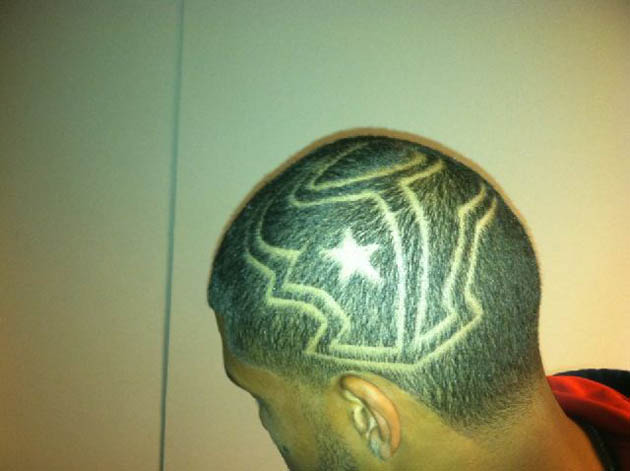
Recently, though, Mauricio had had a breakthrough. His schedule was changed and, consequently, he switched from my reading class to another teacher’s. He began receiving some mentoring from his math teacher and was beginning to enjoy being at school – even going so far as to seek me out one day so I could see his new haircut – one that flaunted a Texans logo etched into his hair

At McDonald’s, I said “Hi” to Mauricio and asked him what he was going to do on his Saturday. He said that he was going to help his mom at work. When I asked him what it was that he would do with his mom he explained that they were going to go, “pick-up metal and, like, find other metal and pick it up, you know?”

I thought about the car outside, realizing that it was Mauricio’s, and thought about the way other students were probably spending their Saturdays – specifically most of the students in my Vanguard (gifted and talented) classes. Although, for the most part, they were engaged in extracurricular activities and some type of recreational time, here was Mauricio spending his Saturday picking up scraps of metal and loading it into a pick-up truck.

I think it is incredible that Mauricio is making growth as a reader. I think that all of his accomplishments despite the poverty in which he lives are only greater reason to celebrate them. I think it is wonderful that Mauricio, now, asks his mom to let him stay at school on days when he might be picked up early because he, “figures that there are some things he should learn [at school].”

One thing I cannot say is that Mauricio lacks grit. He isn’t in want of toughness. He possesses much more than I did at that age. And when I think about this abstract concept of “grit,” what does it really mean in Mauricio’s case?

Is TFA actually helping students like Mauricio if our suggestions to him are simply that he toughen-up? And what, then, becomes our role as we enter Mauricio’s community? This conception of “grit” positions us as external saviors who are entering communities (largely poor and largely of-color) with this “virtue” that these communities lack. Grit, as we currently employ it, says that our students are internally deficient, that they are not rising-up as opposed to being held down. Grit, its implications, and the way it is employed indicate a project that is colonial, rather than compassionate, in nature.

Mauricio is not deficient. He is disadvantaged because of the privileges that his peers enjoy. He was born into a trajectory that would position him to struggle so that wealthier, whiter, and more advantaged students would be positioned to thrive. The child is not lacking grit. He is lacking opportunities, and the resources necessary to fully seize those opportunities.

So I would say, then, that any commitment to “justice” that Teach for America wants to maintain must consider more than simply instilling asense of “grit” in students who are already surviving conditions that most Corps Members never had to face.  As an organization, “grit” cannot be something we prioritize if actual justice is to exist. Grit tells students like Mauricio that they must be twice as good; grit treats systemic oppression as a constant that must be overcome rather than changed; grit perpetuates racism and classism and does little to actually change outcomes for disadvantaged communities.

Justice, conversely, calls upon Corps Members to be advocates for their students. And in being an “advocate,” this means that Corps Members within Teach for America, as well as the organization, must push to change the playing field. Advocacy means that Mauricio's teachers should not tell him simply to be tougher. Rather, advocacy means that we identify the injustice – that Mauricio is under-resourced, has to work on weekends, and is not being given ESL support at school – and leverage our privilege to change the outcomes for the community. As I have begun to say, our duty is to loosen the noose. We must loosen the noose of oppression.

As Coates points out, the notion of being “twice as good” has long existed in the black community. There are many lessons that black parents give their sons and daughters to indicate to them that American society has an added list of requirements for those within non-white bodies to be given access to various opportunities.


 Pray, do not mistake this as an argument against striving for excellence. Excellence, of course, is something that we should all seek to achieve. I simply posit that there is no justice in simply telling black and brown kids that they have to be twice as good as their white peers in order to reach the same markers of success.

As an organization, TFA should eschew grit. Instead of directing energy toward fostering this nebulous trait within students who, frankly, are already remarkably stalwart in the face of hardship, the organization should promote justice for the students it serves. TFA should come off its laurels and use its brand, lobbying power, and Corps Members to advocate for policy and changes that will benefit its students. Teach for America should be defending Affirmative Action. Teach for America should push for immigration reform. Teach for America and its Corps Members should be enfranchising voters – especially when our students’ communities are thosebeing left in the dark.

Ultimately, “grit” is unsuitable as a value that underpins Teach for America’s mission to deliver “transformational change” for its students. It is unsuitable in any conversation in which justice is central. Grit views the communities that Teach for America serves as lacking. Grit ignores the structural barriers that deny students access to higher education. Grit, in its well-intentioned goal to teach students to “rise up and overcome,” offers our students’ detractors a convenient excuse for our students’ plight: “Alas, it is not privilege or advantage that ultimately pushes wealthier, predominantly white, students to success! It is the lack of character that exists in the poor communities of color.” Grit, then, is the newest design in oppression’s collection, an attempt to portray the most disadvantaged as being responsible, in some way, for their own marginalization.

Justice, conversely, cannot co-exist with grit because justice understands that structural inequalities position people for different levels of success well before they have the agency necessary to make choices, to exhibit or not-exhibit “grit” in any sense.

Grit tells students to make a five-star meal with little more than a stone and a pot of water. Our students deserve better than stone soup. Justice, not grit, argues for these children to have a well-stocked pantry.

Grit directs attention toward the exceptional, the “rose that grew from concrete.” But even in honoring this one rose, could we reasonably blame the other flowers for not pressing through the pavement above them?


A grit-inclined perspective would simply appreciate the one flower for having toiled through the pavement. Justice, on the other hand, sees the one rose and asks, “How much taller could this have grown without the stone above?” Justice would begin breaking apart the concrete so that the whole garden could blossom.


Snakes On McCain Copyright © 2011 - |- Template created by O Pregador - |- Powered by Blogger Templates