Wednesday, December 25, 2013

0 Reflection on 2013: Being a Walking Contradiction

For most of us 2013 was the year we graduated college and entered the “real world”. For me, this pales in comparison to the larger change in my life this year: becoming a walking contradiction.

At our core we are all partial hypocrites. It is a flaw that most people do not acknowledge and can go about their daily lives without problem. We tell ourselves that it is okay to lie, but criticize our neighbor for the same action. We blame our own mistakes on situational problems, but see others’ as flaws of their character. If I am late to a meeting I know it was because of traffic, but if someone else gave the same excuse I would roll my eyes. It is so easy to give ourselves benefit of the doubt and then place blame on others in the exact situation.

In the same vein, I found myself able to forgive my actions and decisions based on “the right reasons” and not for selfish gain or living up to societal norms.  I joined Teach For America (TFA) and now watch neighborhood schools close and the unemployment rate of Chicago Public School (CPS) teachers rise. I see students outwardly disrespect TFA teachers because they know we will leave. I have also now experienced first hand how poorly we are trained before being thrown in a classroom. On top of that, I commute through the one of the most segregated cities in the country where the north side is being gentrified and the south side has gang issue spreading and crime rates increasing.

On the other hand, I have so many moments of joy in my new life. I spend evenings laughing with my friends and get to explore a city that I love and most of the time the contrary nature of my life could be over looked.  I could not complete this summary of my life without at least mentioning my students: I love them. I cannot imagine not teaching them and constantly feel lucky to be part of their lives. I am not naïve enough to believe that I am the best teacher out there for them, especially with the unemployment rate of CPS teachers. However, the teacher turnover rate at charter schools is exceptionally high (about 2 years in Chicago) and I am of the strong belief that my leaving now would not benefit my students. Indeed one of the best teachers at my school is a former TFA member and someone I whole heartedly look up to.

It is these two sides conflicting sides that I have to balance both in my head and in my heart. The moments of regret come at the macro level with the knowledge that I am advancing problematic institutions and the moments of elation are more consistently at the micro level with students and friends.  I do not know if/how I am going to break out of this hypocrisy that I have built around myself. It is first step in acknowledging it, but does not actually fix any of the problems that I have created. This is my contradiction that I will be living with.

If I had to relive 2013, I do not know if I would make the same decisions.  I can only move forward and focus on my morals matching my actions. I guess there is no true catharsis in this reflection, but that is real life. Everything does not come to a close when the year does, but it does give us a chance to reflect and make changes before the calendar moves us forward. 

Thursday, December 19, 2013

0 What We're Reading Today (12-18-13)

Big, big, big ups to Jay for crushing it on his piece about Beyonce.  It's the piece before this one if you, foolishly, have not yet read it.

Demanding 'no excuses' of schools and 'grit' of poor children while ignoring the real problem - Atlanta Journal Constitution
Maureen Downey

Kanye West: The Higher Learning of the College Dropout - Joseph Boston
Joseph

Two Years Ago, I Saw a Sad Black Boy Named Donald Glover - Gawker
Kyla Marshell

On Defending Beyonce: Black Feminists, White Feminists, and the Line in the Sand - Black Girl Dangerous
Mia McKenzie

An Education Anything but Standard - Wright and Left
Greg Wright

Rinku Sen: What Mandela Taught Us - Color Lines
Rinku Sen

An Ode to Women Who are Difficult to Love - Sister of the Yam

Mandela's radicalism often ignored by Western admirers - Al Jazeera
Simon Hooper

Lost in the World: Finding Kanye West - Do the Write Thing
Do the Write Thing

The Mandelas, hip-hop and Cliff Huxtable: How black popular culture can politicize us - Salon
Brittney Cooper

Washington Redskins are being undermined by Dan Snyder's corrosive star culture - Washington Post
Sally Jenkins

The Sriracha Shutdown Is Actually Happening - The Atlantic Cities
Lily Kuo

Spain's Communist Village Is Making the Rest of the World Look Bad - Business Insider
Dan Hancox

The Hardest Part of the Holidays for Children of Divorced Parents - Role Reboot
Emily Heist Moss

Comparing the Failures of Bush and Obama - The Atlantic
Conor Friedersdorf

What Happens When a Millenial Becomes a Refugee? - The Atlantic
Alice Su

The Best Food Books of 2013 - The Atlantic
Corby Kummer

The South is America's High-School Dropout Factory - The Atlantic
Jordan Weissmann

I Got Myself Arrested So I Could Look Inside the Justice System - The Atlantic
Bobby Contantino

When Minority Students Attend Elite Private Schools - The Atlantic
Judith Ohikuare

Santa Claus and White Racial Panic - The Nation
Mychal Denzel Smith

Chicago and the Municipal-Industrial Complex - The Nation
Rick Perlstein


PS - Cool website if you wanna learn to code: Scratch

Monday, December 16, 2013

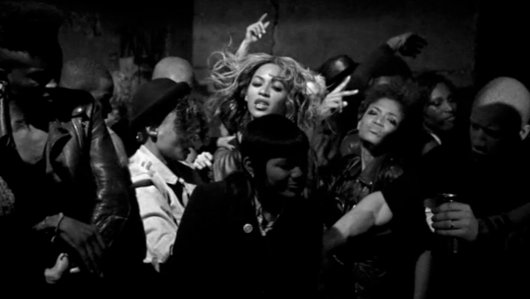
9 To Wake Up Flawless | Beyoncé as Black and Feminist


Before Beyoncé, I don’t think I would ever be a feminist (read: womanist, but let’s stay in conversation). Raised by a queen, I long appreciated women’s strength, their multitudes. I learned their intersections seeing my mother navigate both male and white spaces, seeing her sisterhood from Los Angeles to Boston and beyond, survive. My appreciation though never charged me to jump in and stand with them. I could support from my various places of masculine performing privileges but Beyoncé is the reason I can call myself a feminist now. In reading the growing and mixed discourse since the release of her self-titled fifth album, I realize it is an active work to defend, highlight, and place women, especially women of color in the center of cultural discourses of body, performance, sexuality and race.

            I have no intention to hide, minimize, or shame my undying love for Queen Bey, for that would be unfair; however my bias is not to her goddess-ness but to my personal investment in the celebration of Black women. I know how many other queens I could write about and defend. Beyoncé offers urgency and at this particular cultural moment this feels most appropriate.
            Where were you when Beyoncé dropped? In the wee hours of Friday the 13th, I got a text from my best friend currently in India asking for the new Beyoncé album and I was floored. Not that Bey had secretly released an album-- if anyone right now is going to release a secret album its gonna be her or Kanye and Yeezus just came out-- but that I hadn’t acquired it yet. I scoured the Internet and found out that the Queen was preparing to make history. To say Beyoncé is all I’ve listened to since is not only completely accurate but a reminder of my perspective from the Beyhive. However, in listening to the album and reading the discourse, I found people were so shocked at the dynamic release. I wasn’t. At all. There was disconnect I felt from the mania surrounding this early Kwanzaa present. I went back to older articles with Mrs. Carter to figure out if there was some clue I had forgotten that innocuously now made since. Think back to Amy Wallace’ Miss Millennium article for GQ; in the profile released just before her legendary Super Bowl performance --which, for the record, was watched by less people than Madonna. Toward the middle of the article Wallace documents this “crazy archive” that Beyoncé and her team have created of every video or photograph or diary entry from the Queen since 2005. Among this archive are older videos from her time as a performer growing up in Houston’s Third Ward with Destiny’s Child predecessor Girl’s Tyme.  

            Why does this matter? Why does having collecting an estate of imagery and symbols do for an artist? Don’t other artists have them? Sure. Yeah. But consider this perspective from Black feminist scholar Hortense Spillers, in her work documenting the creation of Black femininity through the “Middle Passage”. She notes that there are little to no record of the female in African/slave archives. Where we see them in the “New World” as feminized and marked, we are missing them from the archive. Spillers notes how she, and Black women (read: women of color) are marked (Mama’s Baby, Papa’s Maybe: An American Grammar Book, Spillers 1987). Beyoncé, probably unknowingly, is doing such a critical work by creating a self-archive. Finding and documenting a narrative, a living bibliography of every photo, every interview, every time she is consumed. We have seen various utilizations of this archive from her two autobiographical films “Year of 4” and “Life is But A Dream”. Though completely over-crafted and not problematizing her cultivation of perfection; this work is still critical and she is, more than less, in control of it. By noting her archival work we can then better understand Beyoncé. Highlighted by various clips and sound bites -- artificial and archival -- we see how her history has constructed her work now. How do we understand her work now? Her work is undoubtedly Black and feminist.
            This concept of Beyoncé Knowles-Carter being a feminist has been under fire since the morning we all recovered from the Queen’s entrance. The first and most interesting critique came from ForiegnPolicy.com Passport Blog “Beyoncé’s New Album Got FP Global Thinker Chimamanda Adichie All Wrong”. They cite Bey’s sample of the acclaimed Nigerian writer’s TEDtalk “We Should All Be Feminists” in her song “***Flawless” as problematic and unhelpful. Blogger Catherine A. Traywick writes,


Adichie's actual speech offers deeper insights than Beyonce's treatment would suggest. Breaking down the many subtle yet insidious ways that sexism guides our choices and shapes our worldview, she's particularly pointed about how cultural expectations surrounding marriage inhibit women's potential by framing subservience as "love."
           
            This refusal to see how these Black women’s work are in conversation speaks to a greater disconnect between understanding how multi-faceted Black womanhood is and can be. Black women and all women of color are constantly critiqued and left out of affirming feminist narratives for the use and consumption of their bodies. Easy cites of these attempts at erasure can be found in our Black celebrities. We have seen the discourse from Eartha Kitt to Donna Summer to Grace Jones to Lil Kim. Black women’s bodies problematized and their sexuality made phenomena. But their discourse however misinterpreted or lost in the systems in which they have found commercial success is doing a work for women of color. It has been a pleasure reading various Black feminists come to bat for their newly enlightened baby sister Bey.

My favorite article is “5 Reasons I’m Here for Beyoncé’, the Feminist from the always dynamic Crunk Feminist Collective. Among the slew of great reasons to “be here” and stand with Knowles include:


What we look like embracing Queen Latifah and Erykah Badu even though they patently reject the term, but shading and policing Bey who embraces it? If Bey is embracing this term, that is laudable. If she’s figuring out her relationship to it, I embrace that. I will never let my politics be limited by folks’ identification with a label, but it is nice when folks are willing to take the risk that comes with the word.


            This speaks to the growing critique by many feminists (I’m assuming white, but we forget our own, too) of Beyoncé, as seen in the aforementioned. If feminism is as nuanced and evolving as the work appears to be progressing, how can we shut out Beyoncé? Her work uses systems of power to highlight the oft-erased space of Black womanhood. We must take her statements and her body as declarative. That is not to say she is or should be the iconic political voice for Black women. Her steadfast integration and presence in the commercial, capitalist, and patriarchal music industry does place her at an interesting table in the master’s house (you, didn’t think I wouldn’t shout out Queen Audre Lorde, did you?). She has more access to communicate feminist statements than say Lauryn Hill or Erykah Badu. She has never been painted as the “Angry Black Woman,” her work has rarely, if ever, been othered by her Blackness. We can understand her access through various ways she is read, as married, as blonde, and sexualized. But we do see her latent feminist perspective as a product of success and privilege. Though flawless, she is not without problem.
            When discussing realities of race, sexuality, gender, I hate the rhetoric of “raising awareness” which as a friend of mine once described as “the epitome of whiteness”, or “starting a conversation.” Beyoncé’s Beyoncé is not a conversation starter. It’s a declaration in a long history of popular Black women announcing their feminism. Their pleasure, their bodies, their feminism at the heart of their work. As queer bodies, including all women’s bodies and all bodies of color, we must define for ourselves the perspectives and identities we maintain to survive. We must create our own archives. To shame her oeuvre is to shame our own. To shame her sonic blackness is to shame blackness. To shame her success, is to shame success of Black bodies wherever we find them. So when she says “Bow Down” she means it and we must take it upon ourselves to read through what all that means for our own flawlessness.


Wednesday, December 4, 2013

0 What We're Reading Today (12-4-13)

The Rise of the New Left - The Daily Beast
Peter Beinart

Yeezus Taught Me - Medium
Kasai

In Defense of Kanye's Vanity: The Politics Of Black Self-Love - Buzzfeed
Heben Nigatu

Harry Belafonte was Right About Jay-Z - Our Legaci
Jessica Ann Mitchell

Kanye's Frantz Fanon Complex - Our Legaci
Jessica Ann Mitchell

Your Brain on Poverty: Why Poor People Seem to Make Bad Decisions - The Atlantic
Derek Thompson

Second Class Citizens - Tufts Observer
Ben Kurland

Substantiating Fears of Grade Inflation, Dean Says Median Grade at Harvard College is A-, Most Common Grade Is A - Harvard Crimson
Matthew Q. Clarida and Nicholas P. Fandos

Teaching While Black and Blue - Gawker
Shannon Gibney

City for Sale - Chicago Reader
Mick Dumke

Mostly Straight, Most of the Time - Good Men Project
Ritch C. Savin-Williams and Kenneth M. Cohen

The Vegan Case Against Pokemon Is Surprisingly Compelling - The Atlantic
Daniel A. Gross

Forgive Your Exes - Hello Giggles
Lev Novak

Nothing Was the Same: on Drake and the white boy imaginary - The Indy
Sam Rosen

Remarks of Vice President Lyndon B. Johnson on Memorial Day of Gettysburg - U Texas Library
Lyndon B. Johnson

A 'Perfect Mother,' a Vodka Bottle and 8 Lives Lost - New York Times
Susan Dominus

Take the Shackles Off My Feet So I Can Dance*: A Call to End Gender Policing - The Feminist Wire
Robert Jones Jr.


Sunday, November 17, 2013

0 What We're Reading Today (11-17-13)

Up in Arms - Tufts Magazine
Colin Woodard

Foucault Explained With Hipsters - Binary This

They Loved Your GPA and then they saw Your Tweets - New York Times
Natasha Singer

Beyond 'I'm Sorry': 5 Ideas to Help Make Obamacare Work - The Atlantic
Garance Franke-Ruta

Can the Defense Budget Shrink Without Risking National Security - The Atlantic
Eric Schnurer

The Grand Old Tea Party - The Nation
Rick Perlstein

Black Voters, Not Gender Gap, Won McAuliffe Virginia - The Nation
Zerlina Maxwell

The Ideal Husband - NY Review of Books
Susan Sontag

Nothing Was The Same: on Drake and the white boy imaginary - The Indy
Sam Rosen

Richard Cohen in Context - The Atlantic
Ta-Nehisi Coates

Ideas - The Paris Review
Patricio Pron

Looking Back at Malcolm X's Message to the Grassroots Speech Delivered 50 Years Ago Today - Davey D's Hip-Hop Corner
Davey D

The Case for International Law - Foreign Affairs
Harold Hongju Koh and Michael Doyle

Hillary's Nightmare? A Democratic Party That Realizes Its Soul Lies With Elizabeth Warren - The New Republic
Noam Scheiber

The Many Battles of Harry Belafonte - The New Yorker
Jelani Cobb


Tuesday, November 5, 2013

0 What We're Reading Today (10-5-13): The "Logan Stayed Home Sick" Edition

Italy Breaks Your Heart - New York Times
Frank Bruni

B.J. Novak

Jamilah Lemieux

Who is Black? - One Drop
Yaba

Robert Kahn

Ta-Nehisi Coates

Homecoming at Howard - New York Times
Ta-Nehisi Coates

Megan Garber

Eleanor Barkhorn

50 Photos of JFK - The Atlantic

Carl L. Hart

Harry Levine

Mark R. Rank

Kanye West Unreleased 2002 Interview

Ama Yawson

Emancipating Hollywood - Vanity Fair
James Walcott

Oprah


Sunday, October 6, 2013

0 What We're Reading Today (10-6-13)

Studying How the Blind Perceive Race - NPR
Kat Chow

No More Allies - Black Girl Dangerous
Mia McKenzie

"Scandal's" racially charged motto: "You have to be twice as good as them" - Salon
Neil Drumming

"Twice as Good": Channeling Black Parenting on 'Scandal' - NewBlackMan (in Exile)
Mark Anthony Neal

Iran's Supreme Leader Ali Khamenei Eyes US Shutdown, Expresses Doubt Over Nuclear Negotiations - The Daily Beast
Christopher Dickey

Mexico's Female Vigilante Squads - The Daily Beast
Katie Orlinsky

A Few Words on The New York Times's Few Words on Afros - Observer
Rebecca Carroll
(New York Times' words on afros)

1 in 3 Black Males Will Go to Prison In Their Lifetime, Report Warns - Huffington Post
Saki Knafo

Hillary Clinton: It's Not Her Turn - The Nation
Richard Kim

How "Jezebel" Smashes the Patriarchy, Click by Click - Mother Jones
Tasneem Raja

Where Are the Uninsured Americans Who Will Benefit From Obamacare? - The Atlantic
Ronald Brownstein

Muhammad Ali's Most Formidable Opponent Was the US Supreme Court - The Atlantic
Allen Barra

Republican States Cut 'Food Stamps' As Feds Promise Not To - Color Lines
Seth Freed Wessler

Obama and the Washington Football Club and (Of Course!) Lanny Davis - The Daily Beast
Michael Tomasky

Daniel Radcliffe's Next Trick Is to Make Harry Potter Disappear - New York Times
Susan Dominus

Cockblocked by Redistribution: A Pick-up Artist in Denmark - Dissent
Katie J.M. Baker

Voice and Hammer - VQR Online
Jeff Sharlet

Roma Immigrants Have Set France on Edge - The Daily Beast
Christopher Dickey, Alice Gulhamon

How Disney Ruined Sex For Everyone - Mark Manson
Mark Manson

We're Not Lovin' It - Jacobin
Michole Aschoff

The Vice of Selfishness - Jacobin
David V. Johnson

The Decline of the American Empire - Jacobin
Doug Henwood

Energy Efficiency: How the Internet can lower your electric bill - Christian Science Monitor
David J. Unger

Spain looks set to drop its fascist-inspired extra hour - Christian Science Monitor
Andres Cala

The 'smartest' city in the world: Santander, Spain? - Christian Science Monitor
Sara Miller Llana

Those Calls Had Come Before: An American Love Story - Gawker
Candace Mitchell

New York Times Still Not Funky Enough for Daft Pink - Gawker
Max Rivlin-Nadler

Can Wendy Davis turn a red state blue? - Al Jazeera
Al Jazeera

Can We Please Bury "Stop the Violence" as a Slogan?  It's Meaningless - Prison Culture
Prison Culture

Scientists Used Facebook For The Largest Ever Study of Language And Personality -- And The Results Are Groundbreaking - Business Insider
Michael Kelley

Why Are There Still So Few Women in Science? - New York Times
Eileen Pollack

Once Alienated, and Now a Force in Her Husband's Bid for Mayor - New York Times
Michael Barbaro

Rich People Just Care Less - New York Times
Daniel Goleman


Snakes On McCain Copyright © 2011 - |- Template created by O Pregador - |- Powered by Blogger Templates